
fot. Agnieszka Sito

Atlantic Coast

Morocco

1160 

We’ll set off from the Agadir area and head north. Our destination is the windy city of Essaouira. We’ll canter along sandy Atlantic beaches, weave our way along rocky cliffs, and push through argan groves. In the evenings we’ll camp under stars and sip wine by the fire, listening to the sound of drums in the background.

  • Days overall
    8 days
    Days in saddle
    6 days
  • Group size
    12
    Available
  • Standard
    Berber caravan (tenting, camping and singing)
    Luggage
    no limit kg
    Food
    local cuisine, vegetarian meals available
  • Skills
    walk, trot, canter and gallop

The ride from the Agadir area to Essaouira is one of our most popular and loved routes in Morocco – our classic, a “must”. If you’re dreaming of an exotic adventure, gallops by the ocean, wind in your hair, ccamping under stars and life on the trail, this Atlantic ride ticks every box.

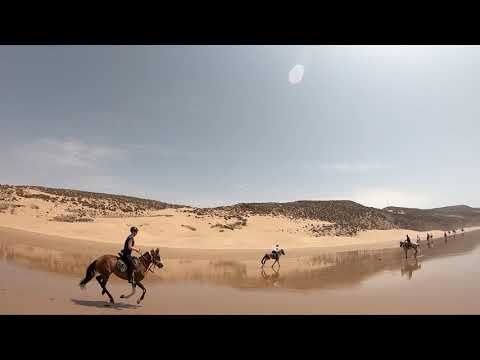
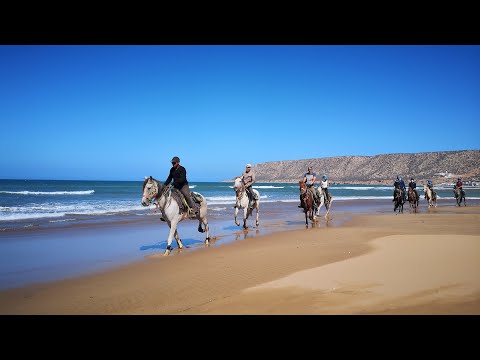
The route is wonderfully varied and seriously scenic. High cliffs, wide sandy beaches, and rolling stretches of argan groves all make quite an impression. There’ll be plenty of chances to canter along the beach and to swim in the ocean, too. Along the way we’ll meet shepherds with flocks of sheep and goats, and even camels wandering across the dunes. All the while, we’ll have the Atlantic wind and the roar of waves crashing against the cliffs as our companions.

During the tour we’ll also visit Essaouira, a picturesque port city, famously known as the Windy City. There we’ll have a walk around the port and visit the the Medina of Essaouira, a UNESCO a World Heritage Site.

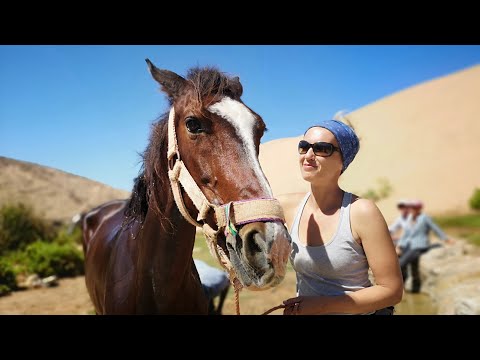
In Morocco we ride stallions. The horses are well trained, straightforward to ride, and happy to work with their riders – but they do have strong personalities, and their hot blood can show itself now and then. Most of the herd is fairly calm, and for more ambitious riders there are also a few more spirited mounts. Our horses are almost exclusively so-called “Arab-Barbs”, a cross between Arabian and Berber bloodlines. On average they stand around 165 cm at the withers, though some are a bit smaller. Compared to purebred Arabians, they tend to be a bit more solidly built and steadier in temperament – as they were made for trail rides. As on most multi-day rides walking is the main pace, but there will also be a decent amount od trotting and plenty of canters and gallops, with the fastes ones on flat, sandy beaches.

This ride is designed for confident riders who are comfortable in all gaits, including fast gallops, and who have good control of their horse both individually and within a group.

Minimum age for riders is 15 years old.

The rider weight limit on this ride is 90 kg.

What is included in this tour?Items that are included in the cost of tour price.
  • Horse with full tack
  • 2 nights in a house/villa by the Ocean
  • 5 nights camping/tenting on the trail
  • All meals during the tours
  • Airport transfers to/from Agadir (on the first and last day of the tour) for recommended connections
  • English-speaking pilot/guide
  • Local horse guides
What is not included in this tour?Items that are not included in the cost of tour price.
  • Flight tickets
  • Private transfers – for flights to/from Agadir outside recommended arrival times (70 euro one way)
  • Tourist insurance covering high-risk sports (you can get one through us)
  • Optional: tip for the guides
  • Minor expenses (souvenirs, additional snacks, admission tickets in free time, etc.)
  1. Day 1 Welcome to Morocco!

    Riders fly to Agadir and are transferred to Tamri, a small town where we’ll spend the evening and night in a house by the ocean. There are no group activities planned for this day. Free time can be used for a walk and a swim in the sea. In the evening, we’ll have a welcome dinner together and talk for hours about the adventure ahead of us.

  2. Day 2 Trail through cliffs

    The first part of the day is all about slowing down and properly unwinding. After breakfast, before we set off, we’ll take a breather by the ocean – there’ll be a bit of time for a swim and a walk along the beach, we’ll also meet our horses. After lunch, we saddle up and hit the trail. Today’s route runs along coastal cliffs, past beautiful beaches and herds of grazing camels and goats. Towards the end of today’s ride, we’ll climb up to a viewpoint with a truly breathtaking panorama over the endless Atlantic. We’ll be riding for around 3–4 hourstoday. In the evening, we’ll reach a camp set further inland, overlooking a picturesque bay.

  3. Day 3 Goats and argan trees

    After breakfast, we’ll pack our luggage onto the support vehicle and mount up. The trail takes us inland as we enter the world of argan trees. Those with sharp eyes may spot goats grazing up in the branches. We’ll have lunch surrounded by nature. In the second part of the day, the route runs back along the ocean, weaving between cliffs. There are some mountainous sections, too, with some steep and narrow paths there. The climbs and descents can be demanding, but our horses handle these conditions brilliantly, and the breathtaking views make every effort worth it. We’ll spend around 5–6 hours in the saddle today. Overnight will be by the ocean, near a small fishing village.

  4. Day 4 Atlantic coast

    We continue along narrow paths running right by the coast. Along the way, we’ll once again take in the endless ocean, golden beaches, and rocky formations battered by crashing waves and the wind will accompany us along the way. Depending on the weather, we’ll have lunch either on the beach or in an argan forest. After the break, we’ll climb up the cliffs and carry on to the next fishing village. We’ll set up camp near the beach.

  5. Day 5 Horse races on the beach

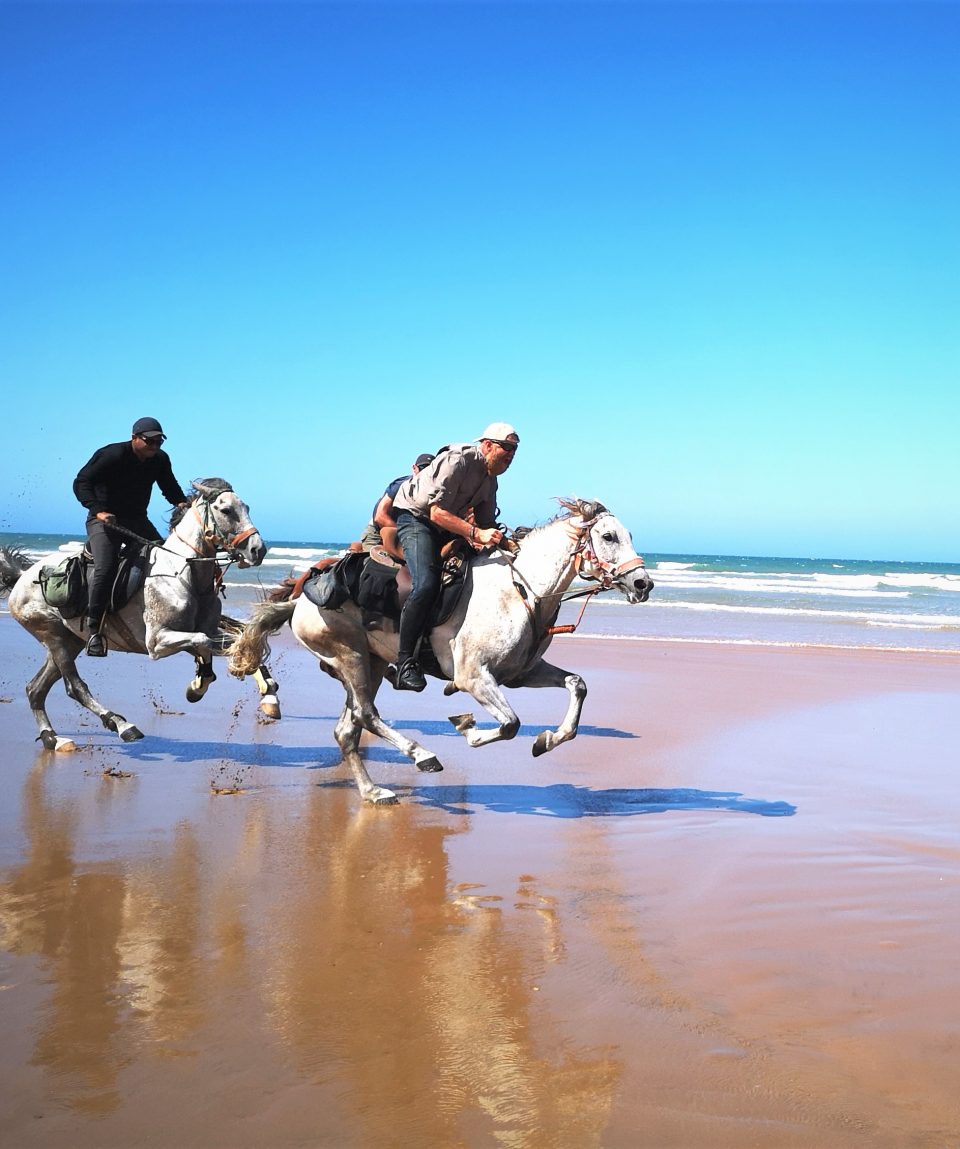
    This is the longest riding day – we’ll spend around 7 hours in the saddle. In the first part of the day we head inland, making our way through argan-covered hills, narrow trails and gullies, with no shortage of stunning viewpoints. In many places you can spot grazing camels, we’ll also pass a few Berber villages. We’ll have lunch on the beach at a small local restaurant. After the meal, the scenery – and the pace – change: we’re back to the cliffs and beaches, and on the way we’ll ride through a picturesque basin with small waterfalls. There’ll be plenty of chances for gallops, and if the weather plays along (low waves), we’ll organise horse races along the shoreline. In the late afternoon we’ll reach our next camp, with a view of the sun setting over the ocean and close to an access path down to the beach.

  6. Day 6 Towards Essaouira

    After breakfast, we’ll head towards Essaouira, with a truly stunning route ahead of us. The trail runs across vast beaches – here and there dotted with eucalyptus trees, sliced through by ribbons of dunes where seabirds wade and forage. Once we’ve crossed them, we begin climbing up to some of the highest cliffs in the area. From the top, there’s quite a view over a wide bay, the blue of the ocean, and the sandy tracks winding far below – the very ones we followed earlier. We’ll have lunch with an Atlantic view. After a short rest, we’ll set off again. The route once more follows the cliffs and beaches, but the afternoon light gives the landscape a completely different feel. We’ll end the day back at our ocean-side camp.

  7. Day 7 Windy City

    This is our last day on horseback, and we’ll spend it differently depending on everyone’s mood and the weather. After breakfast, we can ride bareback down to the beach for a photo session, give the horses a swim, run a few final gallops, and then head back to the stables for lunch. Alternatively (if the weather is worse), we’ll go for a final three-hour ride out, and return to the stables for lunch as well. After the meal and a bit of rest, we’ll head out to Essaouira – the Windy City. During a walk, we’ll see the defensive walls and the fortress, and wander in among the stalls of the souk (market). For the night, we return to the villa. Our farewell dinner will be held either at the villa or at the stables, depending on the weather.

  8. Day 8 Farewell to Morocco

    It’s time to say goodbye to Morocco. After breakfast, if your flight is later in the day, there’ll be time for a final walk along the beach or a visit to a local hammam. After lunch, the group will be transferred to the airport.

The guide might modify the route according to weather conditions and group's riding skills
fot. Agnieszka Sito
fot. Agnieszka Sito
fot. Agnieszka Sito

We spend the first night in Tamri, a small town about an hour-long drive from Agadir. We’ll stay in a house by the ocean, in twin rooms with a shared bathroom. For the final night, we’ll stay in a villa near Sidi Kaouki, in 2- and 4-person rooms with en-suite bathrooms, plus a pool and a garden for us to enjoy.

During the main part of the ride along the coast, the group camps in tents. Thick foam pads serve as mattresses. Each rider is entitled to one shower per day. We have a shower tent, a bucket of heated water, and a cup for pouring. Apart from the first and last day of the ride, we won’t have access to electricity, a solid power bank is a must-have.

We provide all meals. During the ride, our field kitchen is looked after by a cook. Breakfasts are fairly simple: Moroccan flatbread, jams, nut spreads, honey, cheese spread, argan oil, and amlou (an argan paste — traditionally, Berbers have bread dipped in oil and paste for breakfast). Lunch is usually various vegetable-and-fruit salads, pasta or rice, and also fish. For dinner, we’ll be served traditional dishes such as tagine or couscous.

In Morocco we drink bottled water (and if you’ve got a sensitive stomach, we recommend using it for brushing your teeth as well). There’s also no way we’re skipping refreshing Berber tea — with mint and sugar. A glass of wine is served with dinner.

It’s worth remembering that Morocco is a Muslim country. Access to alcohol can be limited, although there are stores in Agadir and Essaouira where alcohol is available.


Equipment

We use standard English saddles, mainly all-purpose ones. The bridles are traditional and we ride with bits. The tack is essentially the same as in Europe.

In addition, each horse is fitted with two large saddle bags. We use them to carry water supplies, lunch, and other essentials. For valuables like your phone or documents and other small items we recommend keeping them in a zipped waist pouch.

What should you take with you

Our rides in Morocco are quite comfortable – for a partially wild trail with tenting/camping. We have a support vehicle, a large car, to carry our belongings and every morning the crew loads it with the camping kit and the riders’ luggage, and then drives everything to the next overnight spot. You only need to take the essentials you’ll need for that day’s ride.

  • passport
  • cash, euro is a good choice
  • electronics – phone, camera, powerbank
  • sleeping bag
  • flashlight, headlamps are handy
  • sunscreen with a high SPF
  • sunglasses
  • head cover (against heat and Sun)
  • personal riding equipment (helmet, pants, boots, gloves, itp.)
  • light raincoat / jacket
  • flip-flops / sandals for walking and showering
  • swimsuit
  • digestive remedies
Date Trip Status Price Spots  
10 April 2026 - 17 April 2026
Full group, English-speaking hosts/guides
1160 
0
29 May 2026 - 5 June 2026
Available, English-speaking hosts/guides
1160 
6
12 June 2026 - 19 June 2026
Full group, English-speaking hosts/guides
1160 
0
7 August 2026 - 14 August 2026
Available, English-speaking hosts/guides
1160 
5
4 September 2026 - 11 September 2026
Full group, English-speaking hosts/guides
1160 
0
18 September 2026 - 25 September 2026
Full group, English-speaking hosts/guides
1160 
0
16 October 2026 - 23 October 2026
Full group, English-speaking hosts/guides
1160 
0