Cappadocia

Turkey

2270 

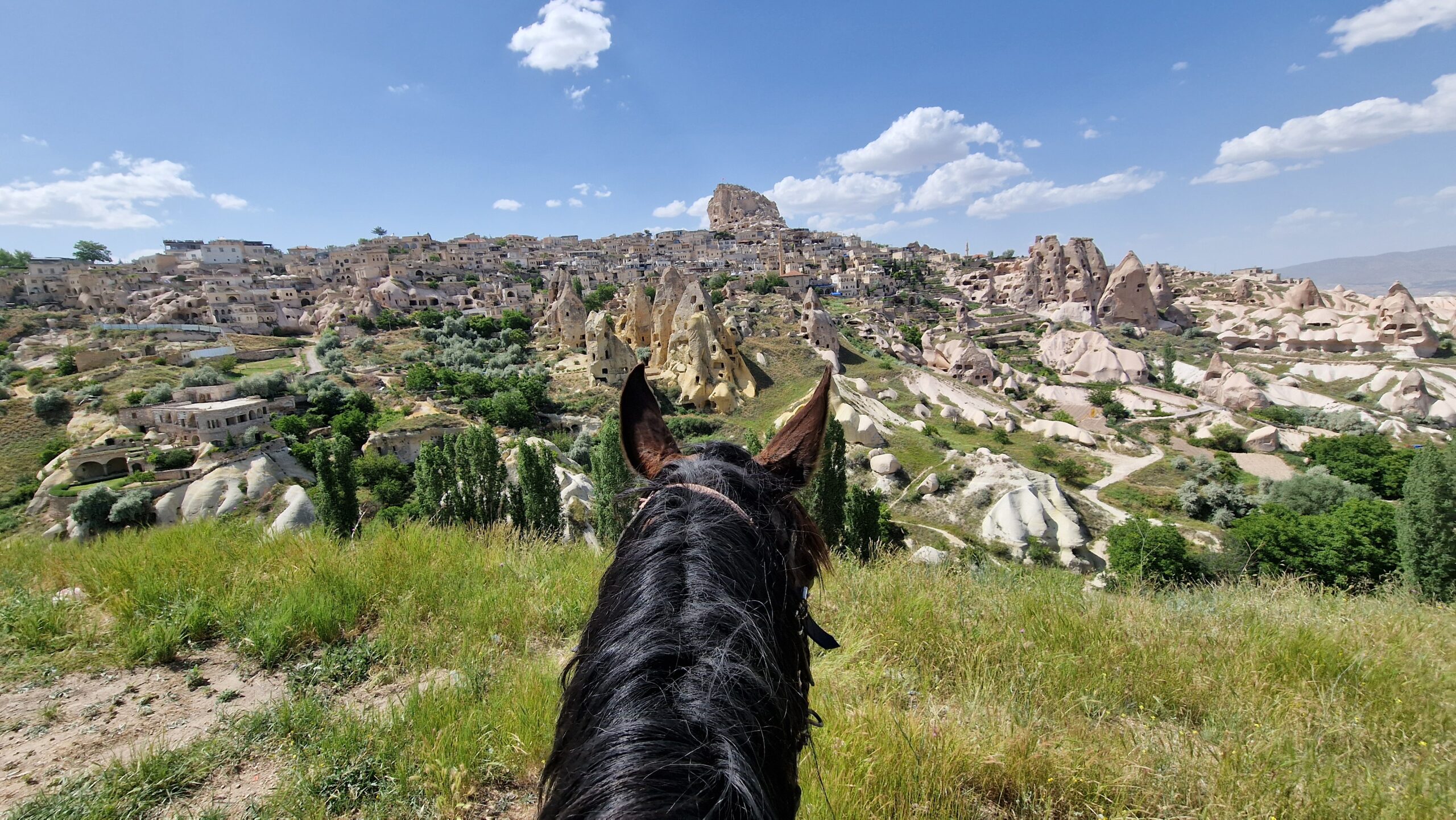
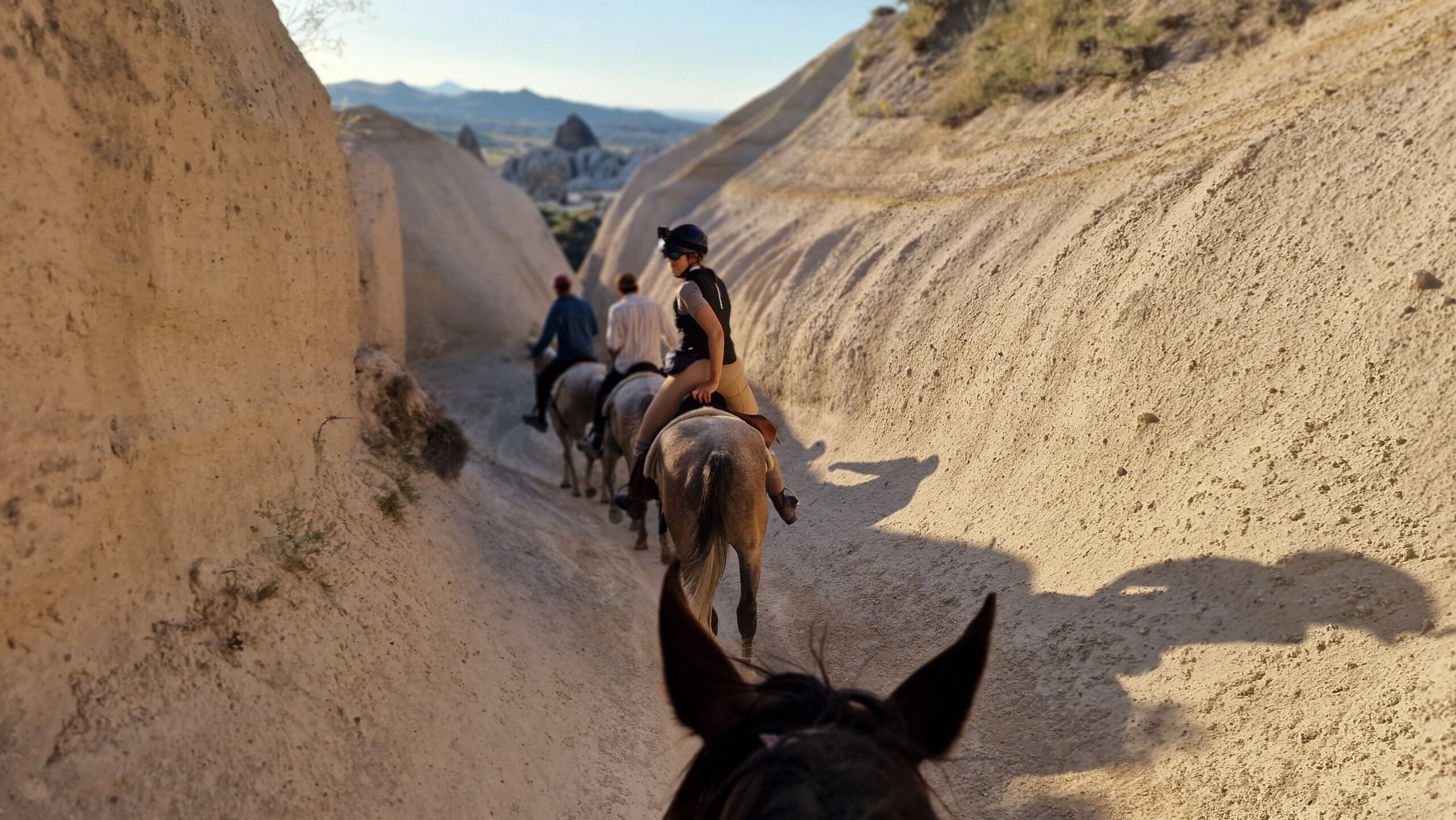
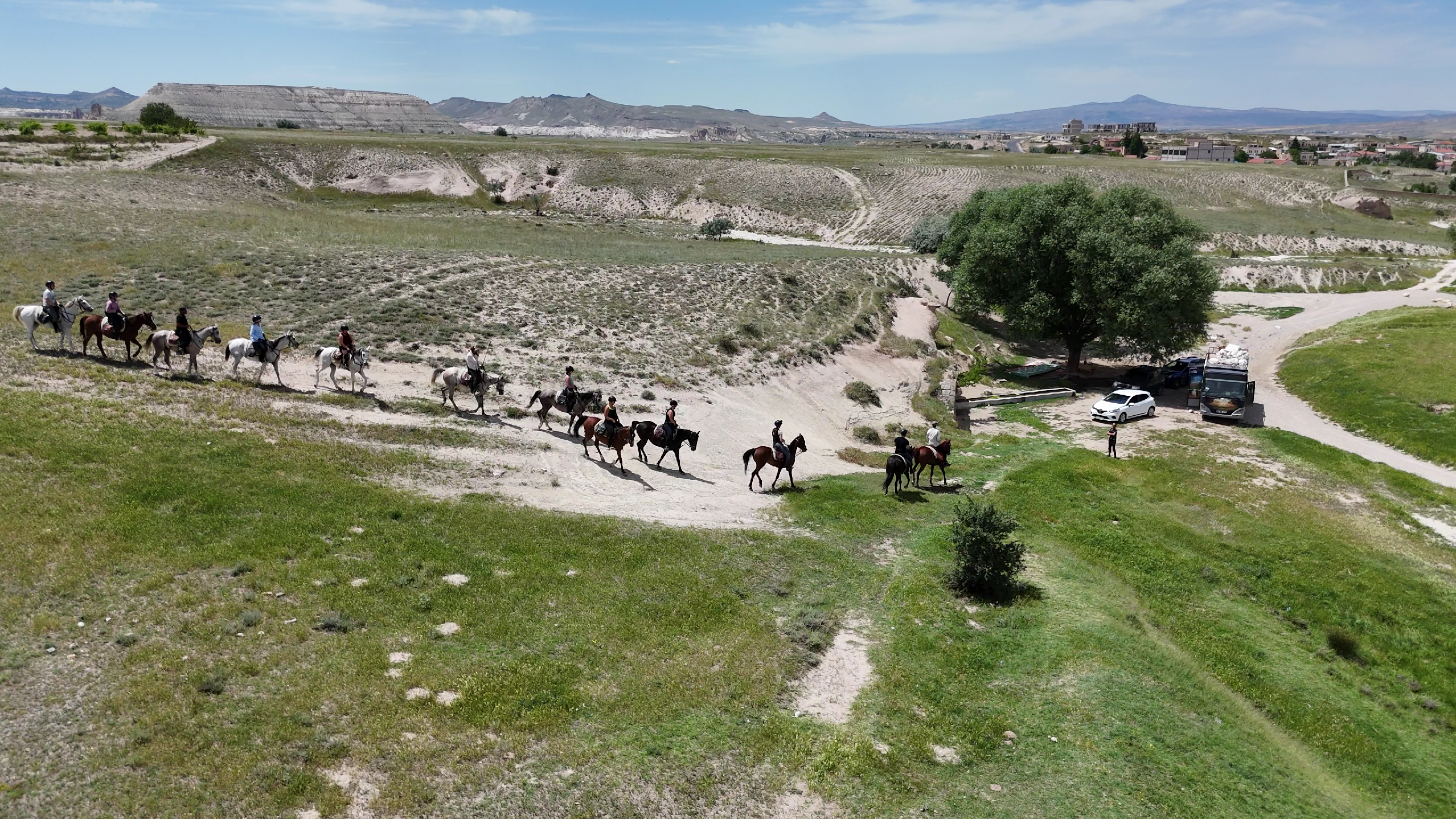
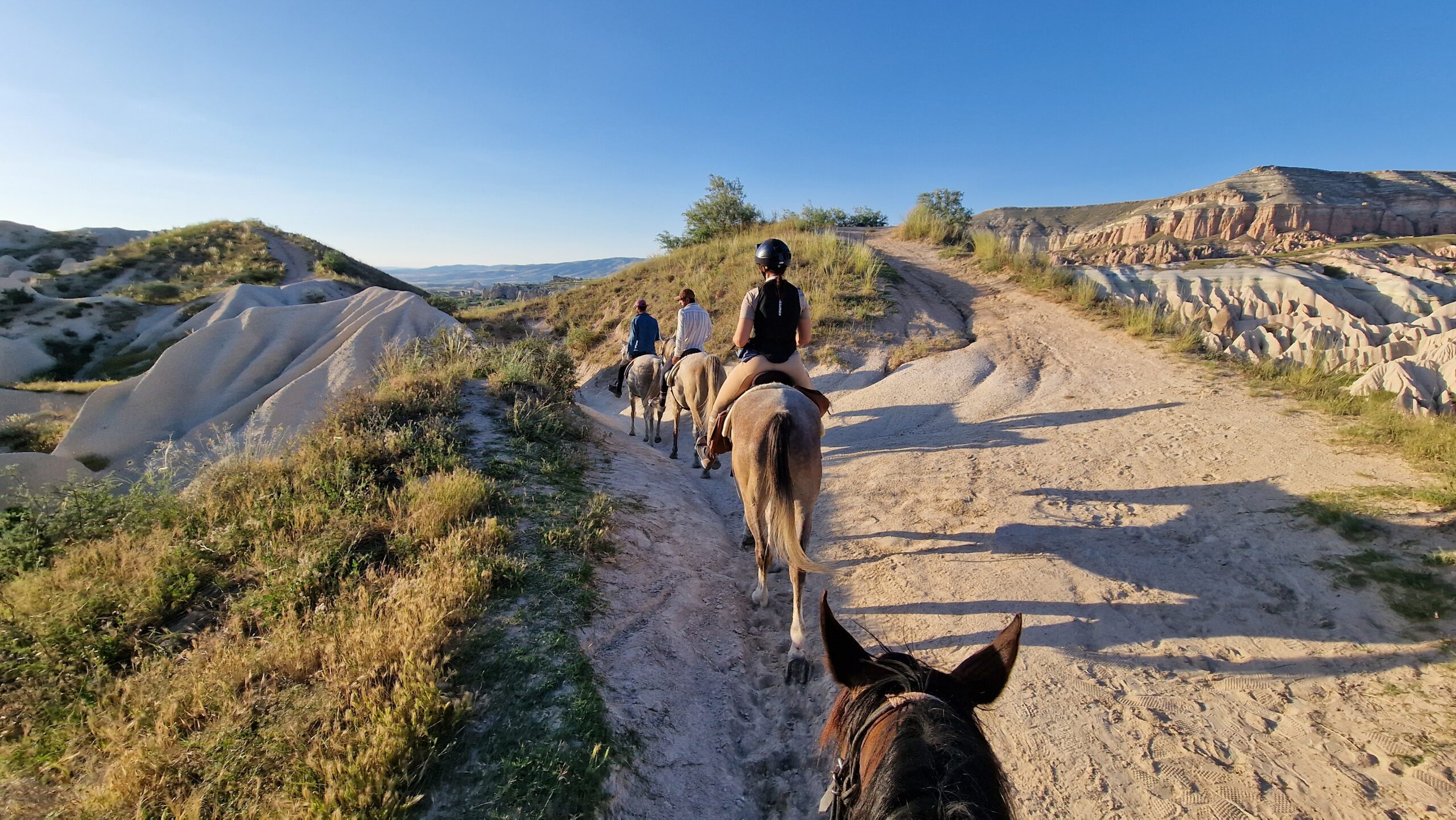
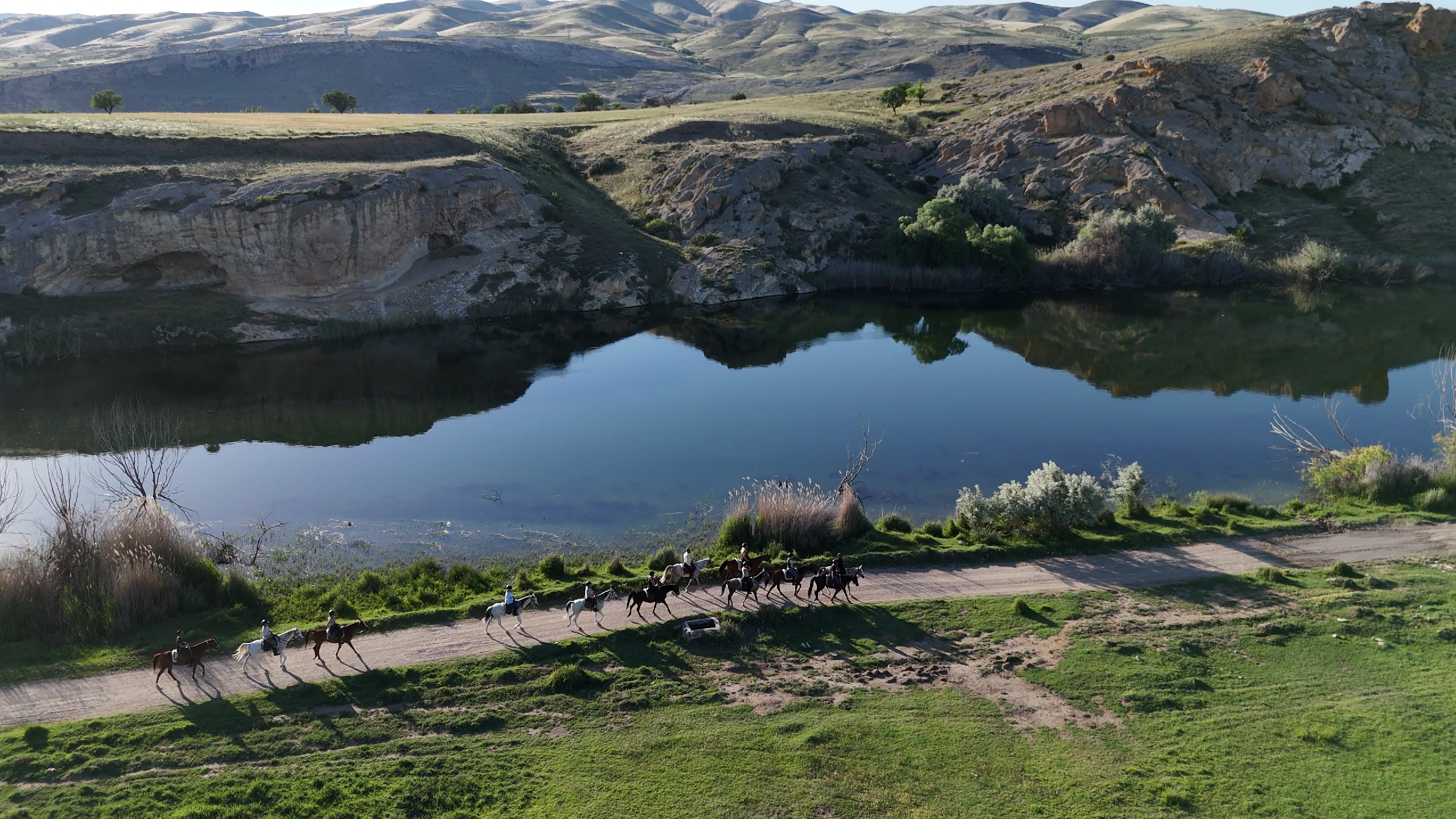
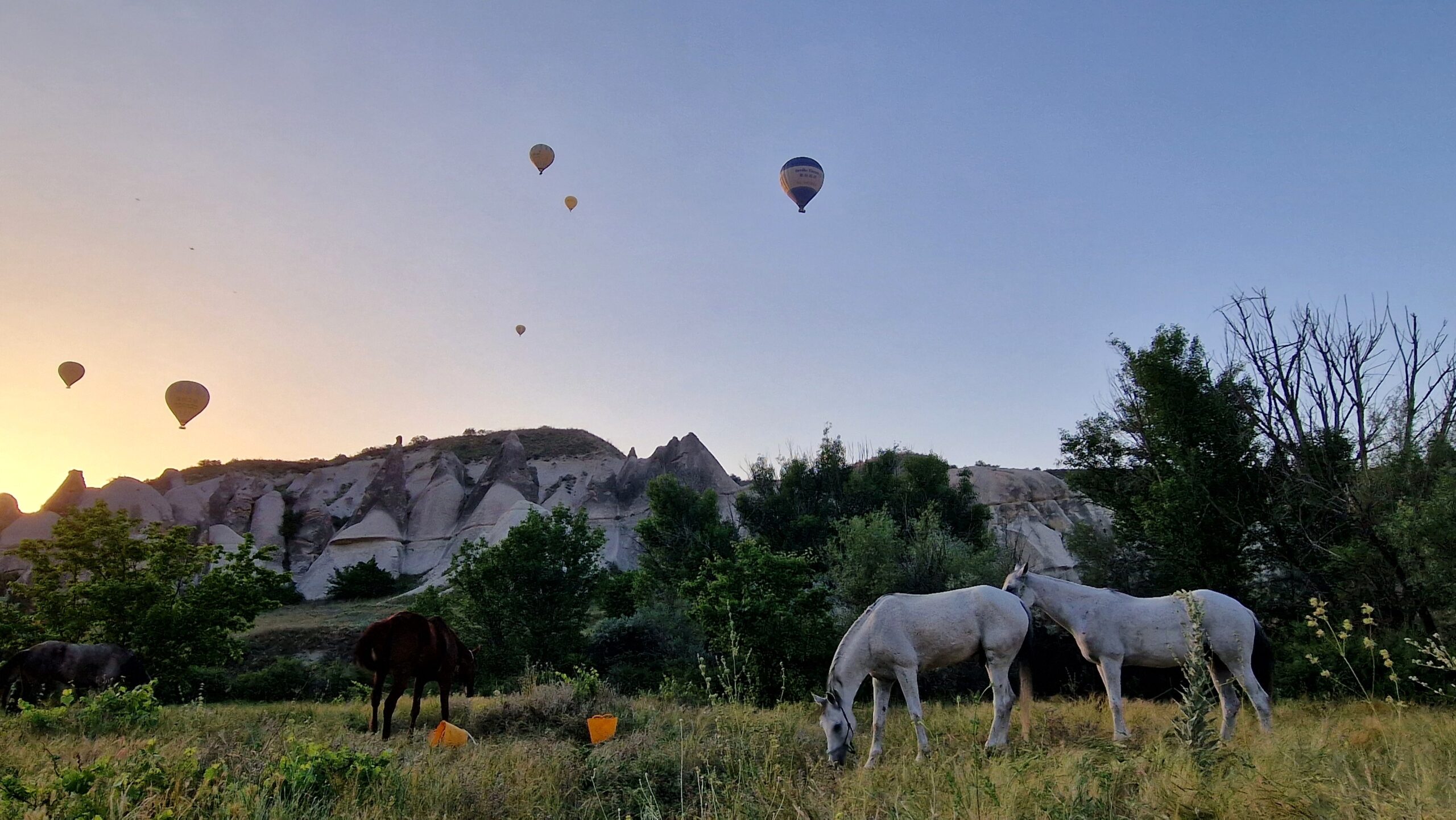
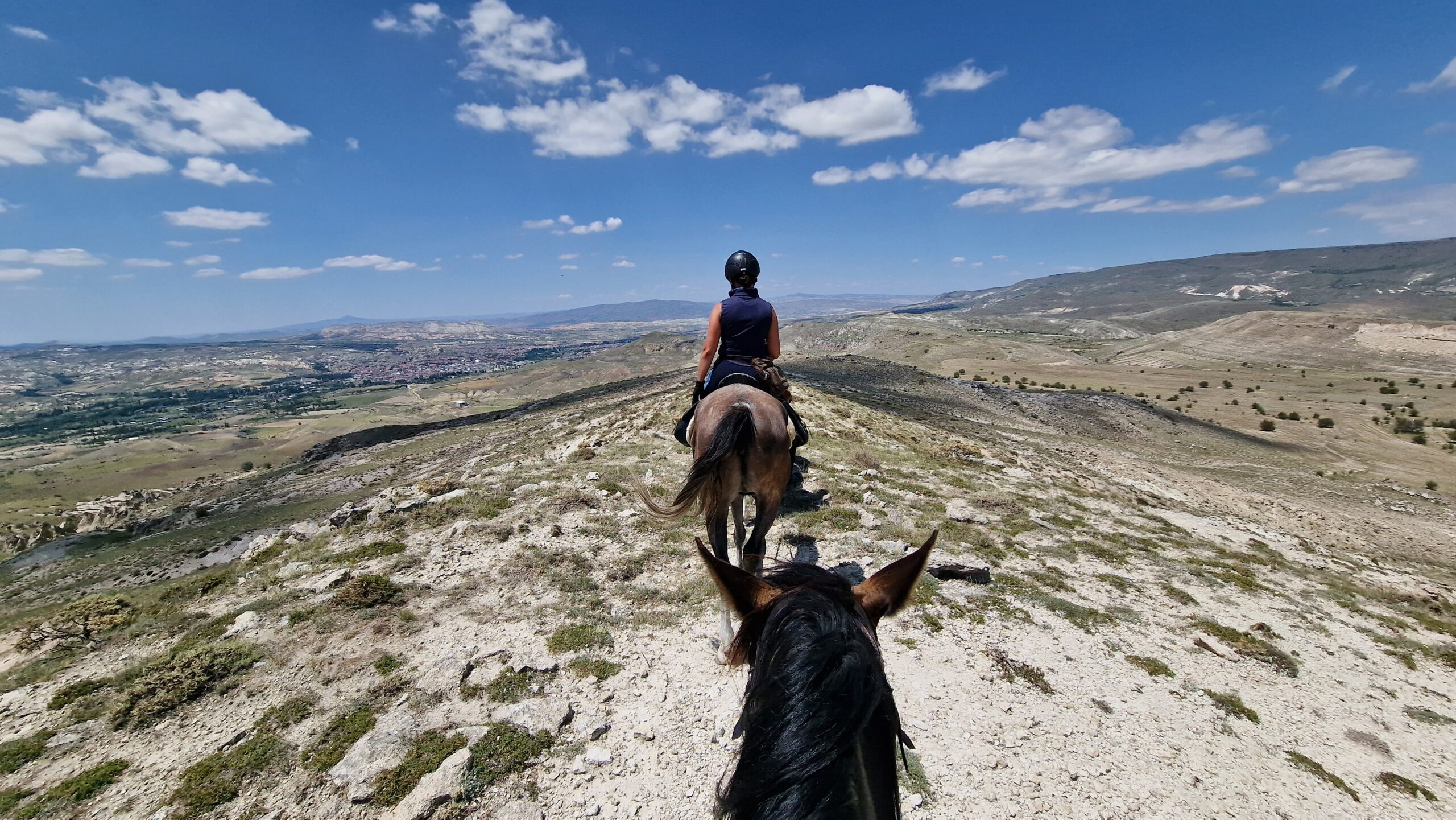
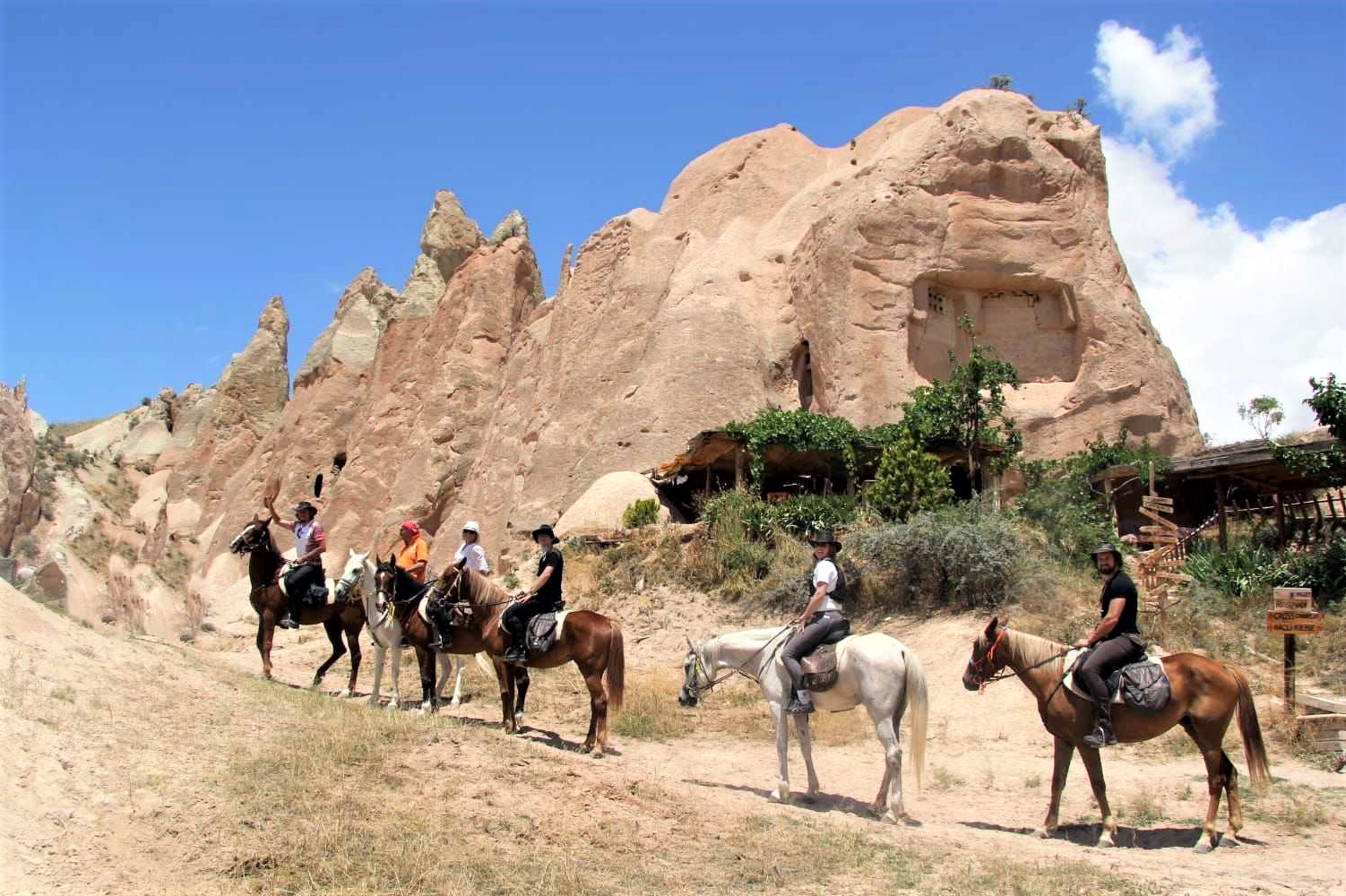
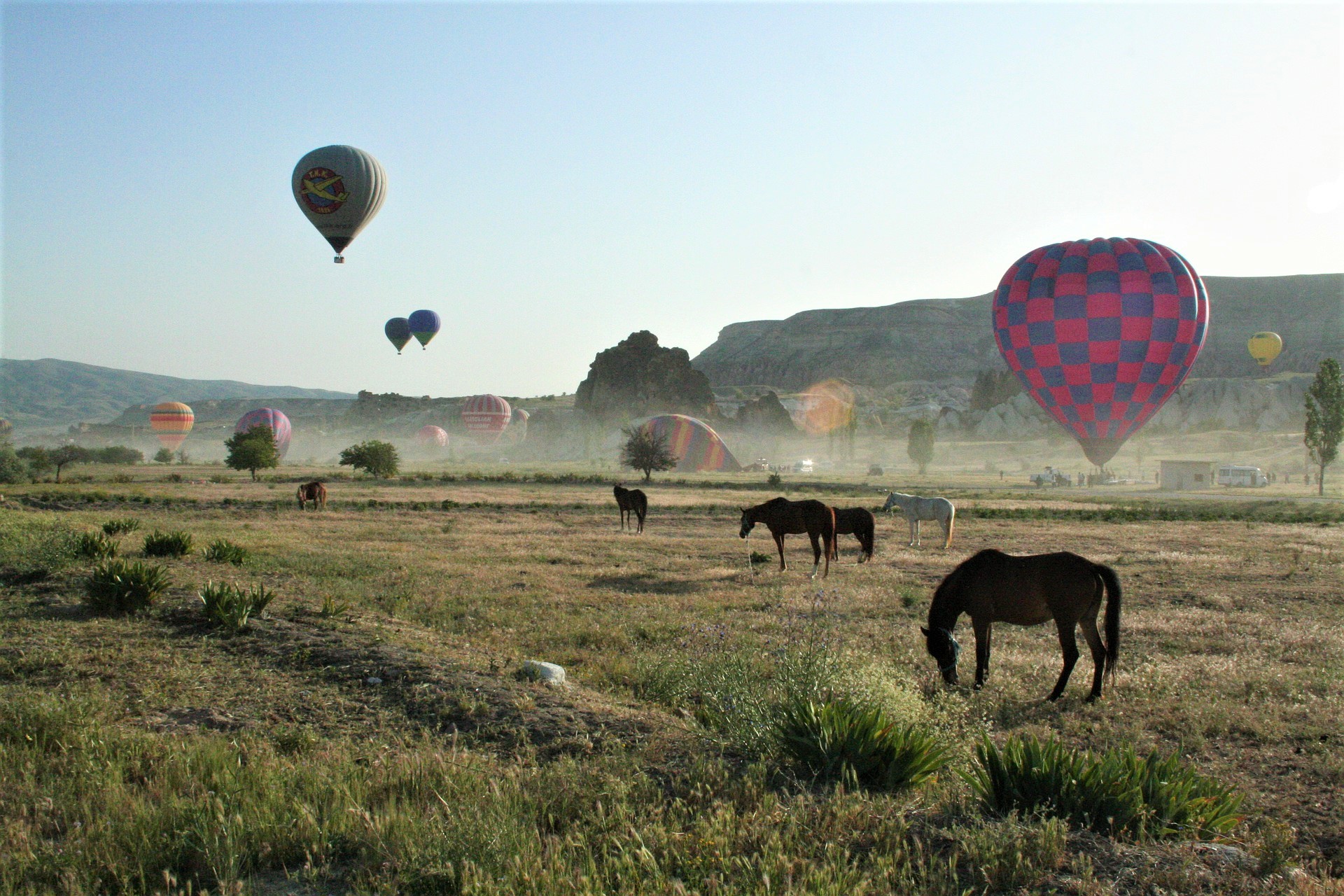
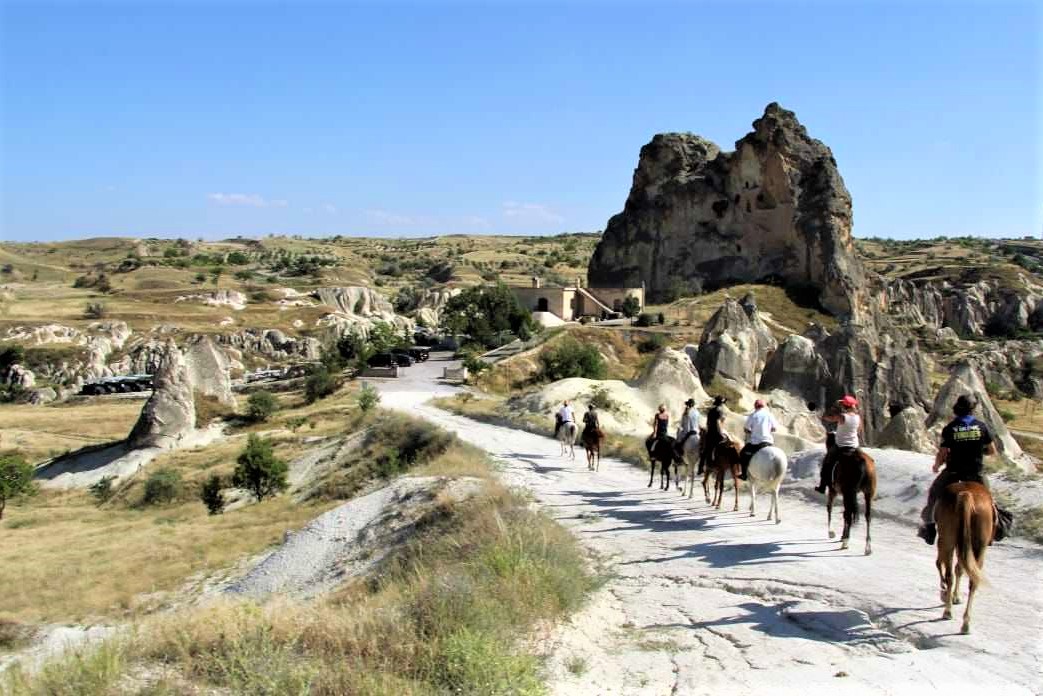
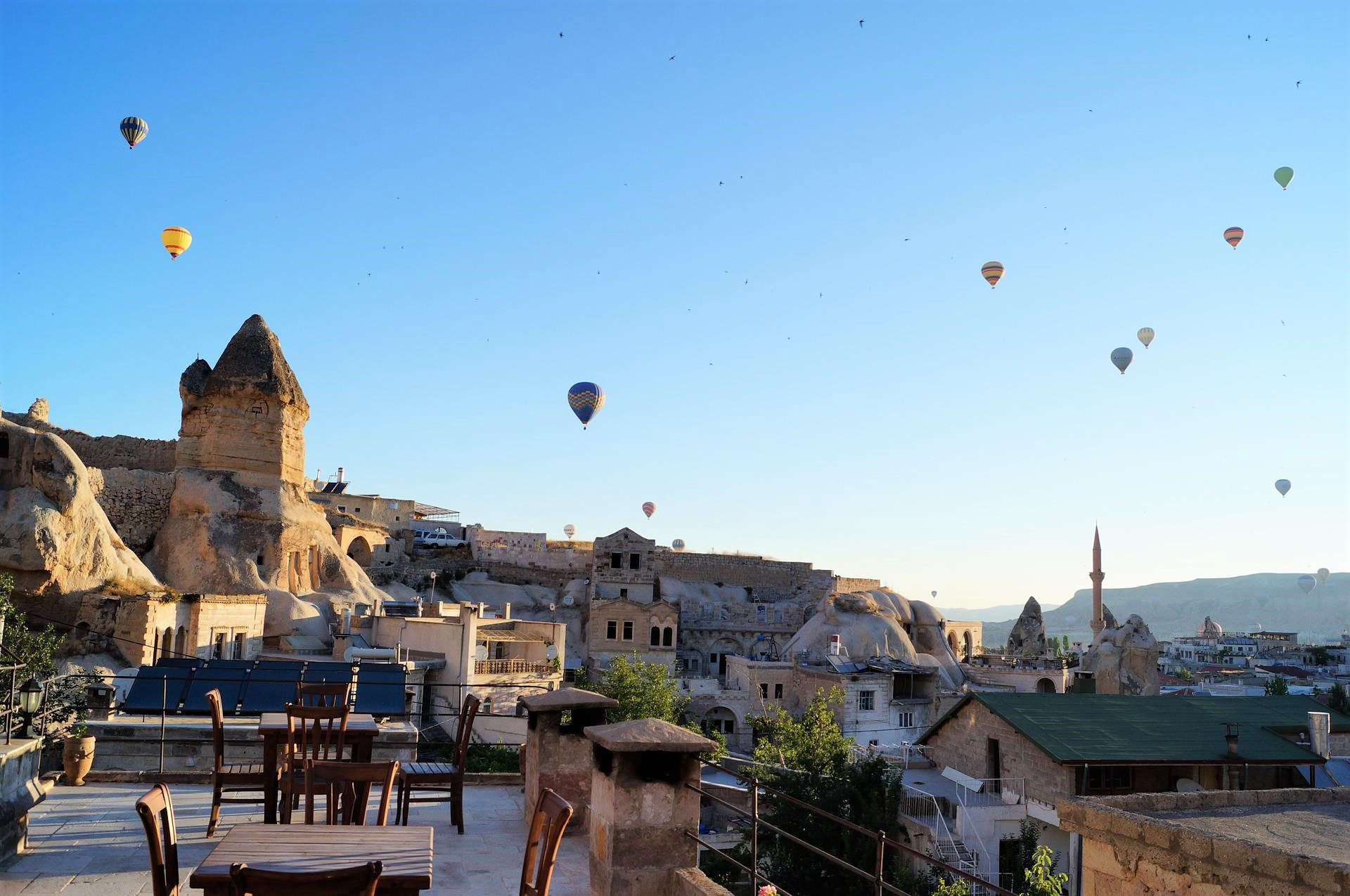
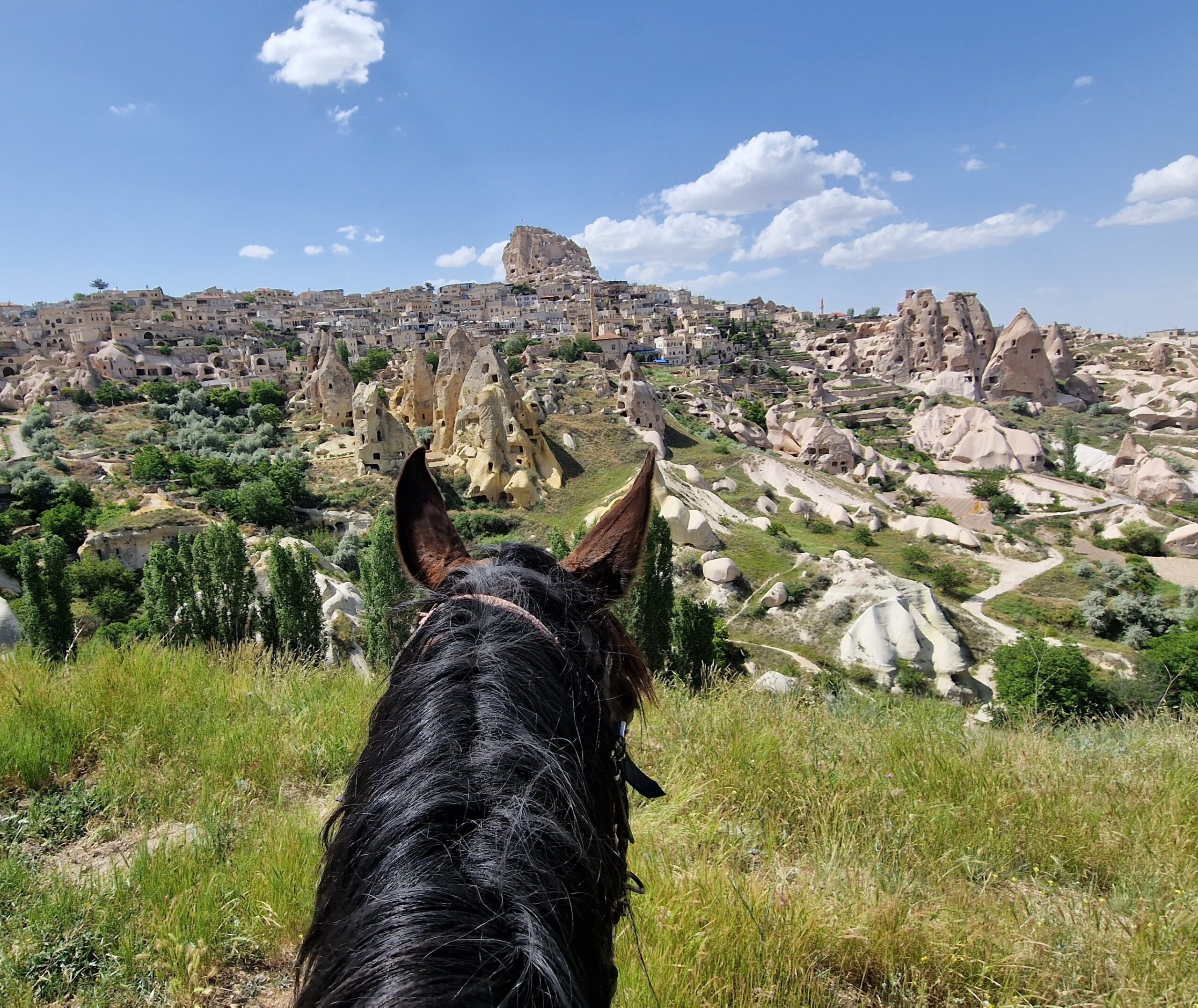
Cappadocia is a land straight from legends and postcards. Our trail leads through a labyrinth of fairy-tale-like valleys: the Rose Valley, the Swords Valley, the Imagination Valley, the Love Valley and every single one of them looks different and beautiful. We will encounter ruins of ancient settlements, houses carved in rocks, see dozens of balloons taking off in the sky and visit ancient monuments. Along the way we will dine at beautifully set tables enjoying Turkish cusine. We ride out to experience this adventure on beautiful, agile Arabian and Karachay horses.

  • Days overall
    9 days
    Days in saddle
    6 days
  • Group size
    11
    Available
  • Standard
    Turkish caravan (hotels and tents, delights and campfires)
    Luggage
    no limit kg
    Food
    local cuisine, vegetarian option available
  • Skills
    walk, trot, canter and gallop

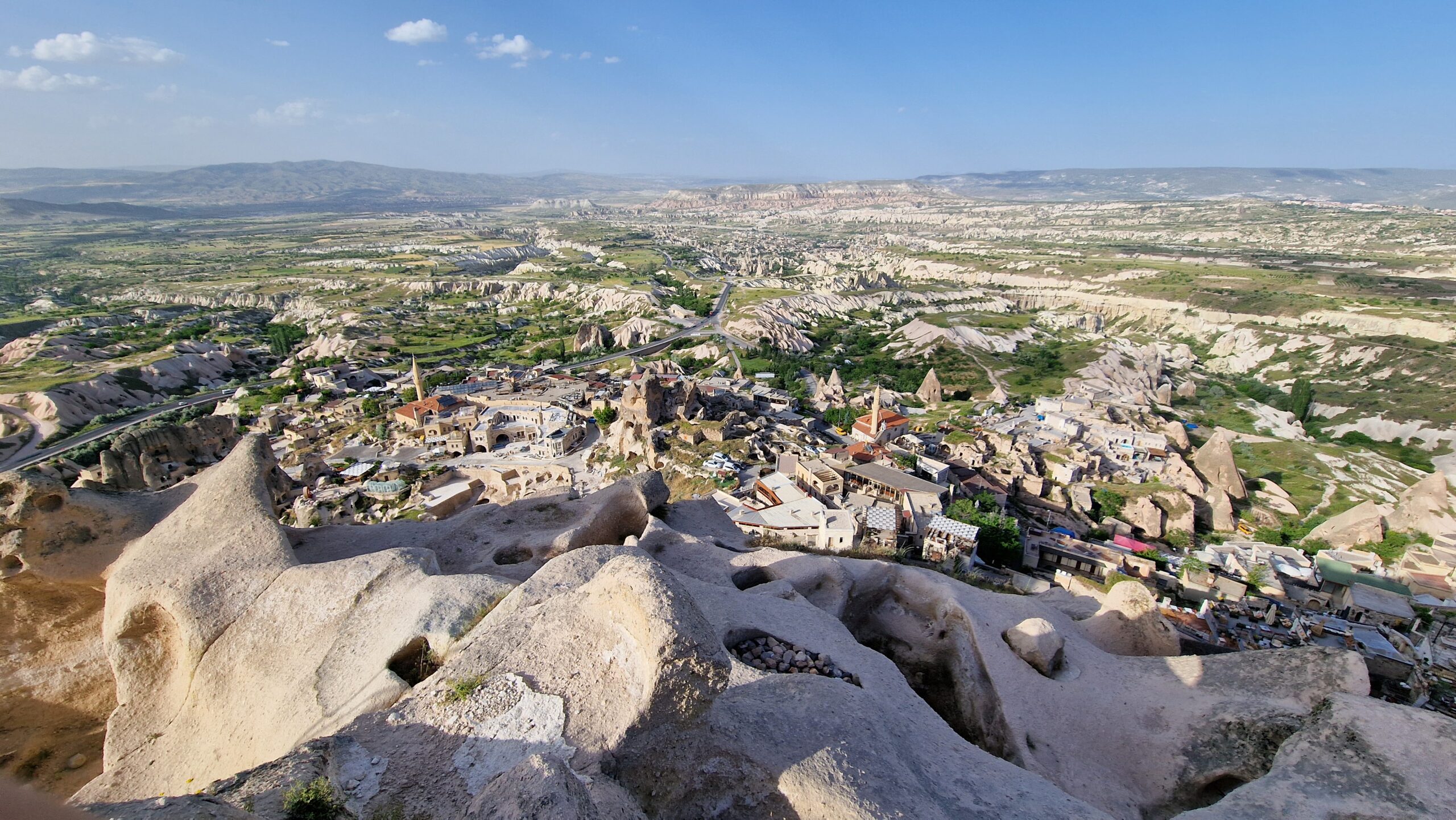
Cappadocia is a fascinating historic region in Anatolia, in central Turkey. It’s best known for its extraordinary rock formations, villages and towns carved into stone and, of course, hot-air balloon flights. A monumental massif of an extinct volcano towers above these fairytale valleys making the landscape even more picturesque.

Centuries of different peoples, cultures, religions, trade routes, and influences mixing here — combined with the region’s spectacular landscapes and terrain — make Cappadocia genuinely captivating, and even a bit magical. Beyond the usual tourist highlights, Cappadocia’s rich heritage is visible everywhere: in its architecture, culture, ethnic legacy, and the flavours of its local cuisine. Horses have long been, and still are, an inseparable part of that heritage — something you’ll notice along the ride.

Over the course of history, this land changed hands many times, building an exceptionally rich historical, cultural, and religious legacy. From the Bronze Age to the present day, Cappadocia has been ruled by the Hittites, the Mushki, the Lydians, and the Greeks. During the Roman and Byzantine eras, Christianity flourished here — which is why old churches, monasteries, and castles are scattered along our route. When the Seljuks took control, the region came under Turkish rule and Islam. Cappadocia remained part of the Ottoman Empire until the end of the First World War, and in 1922 it became part of independent Turkey.

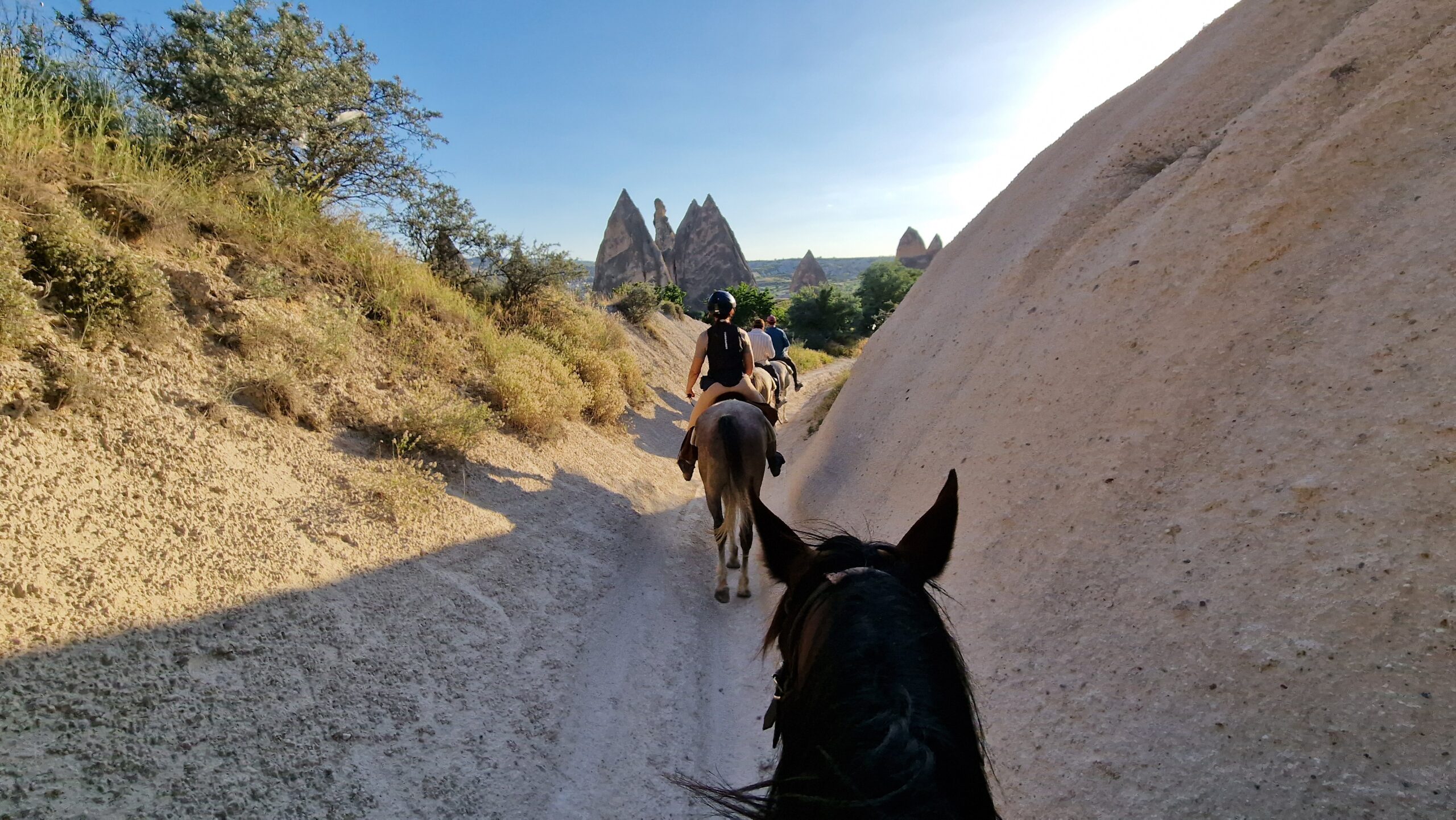
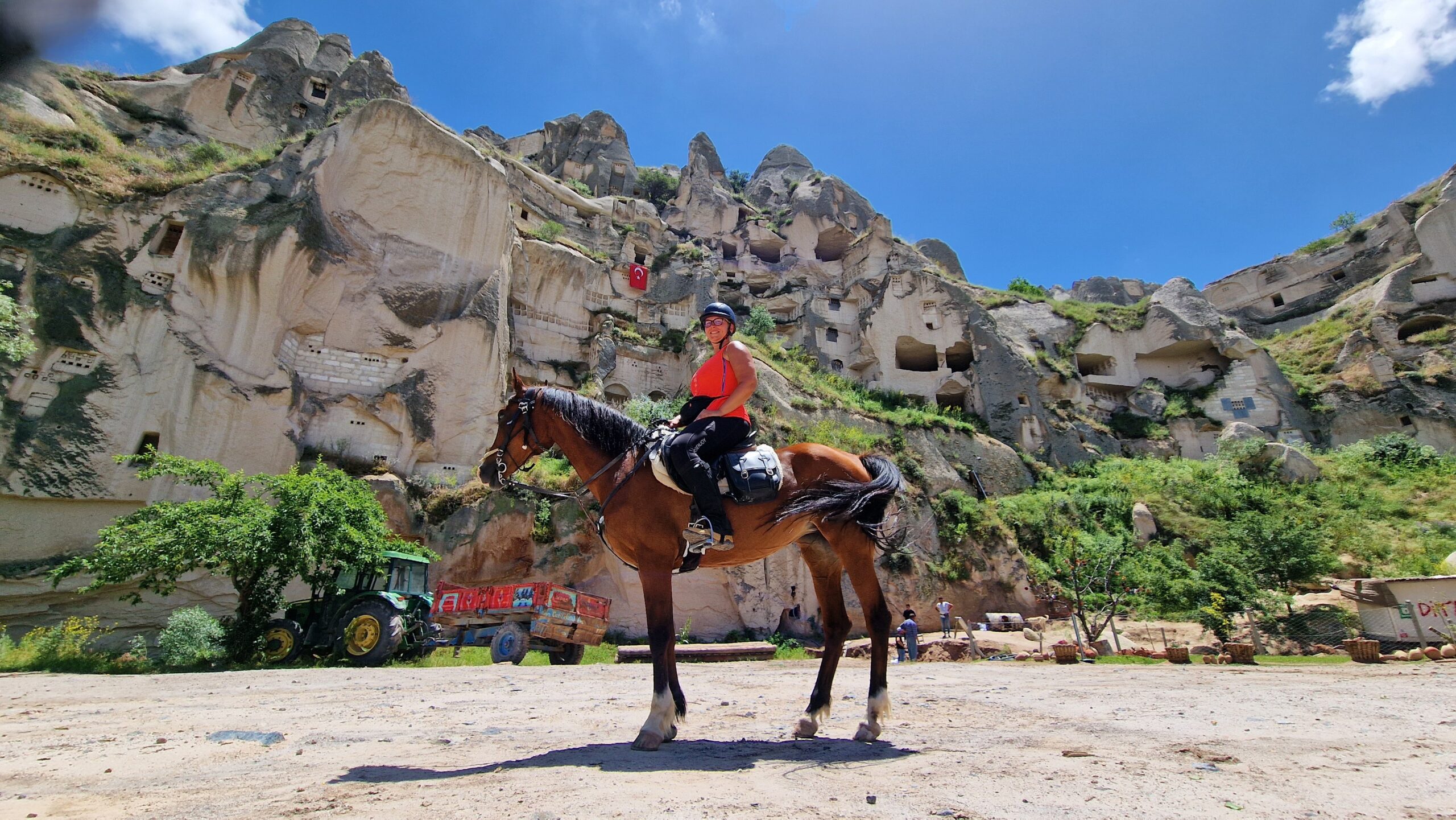
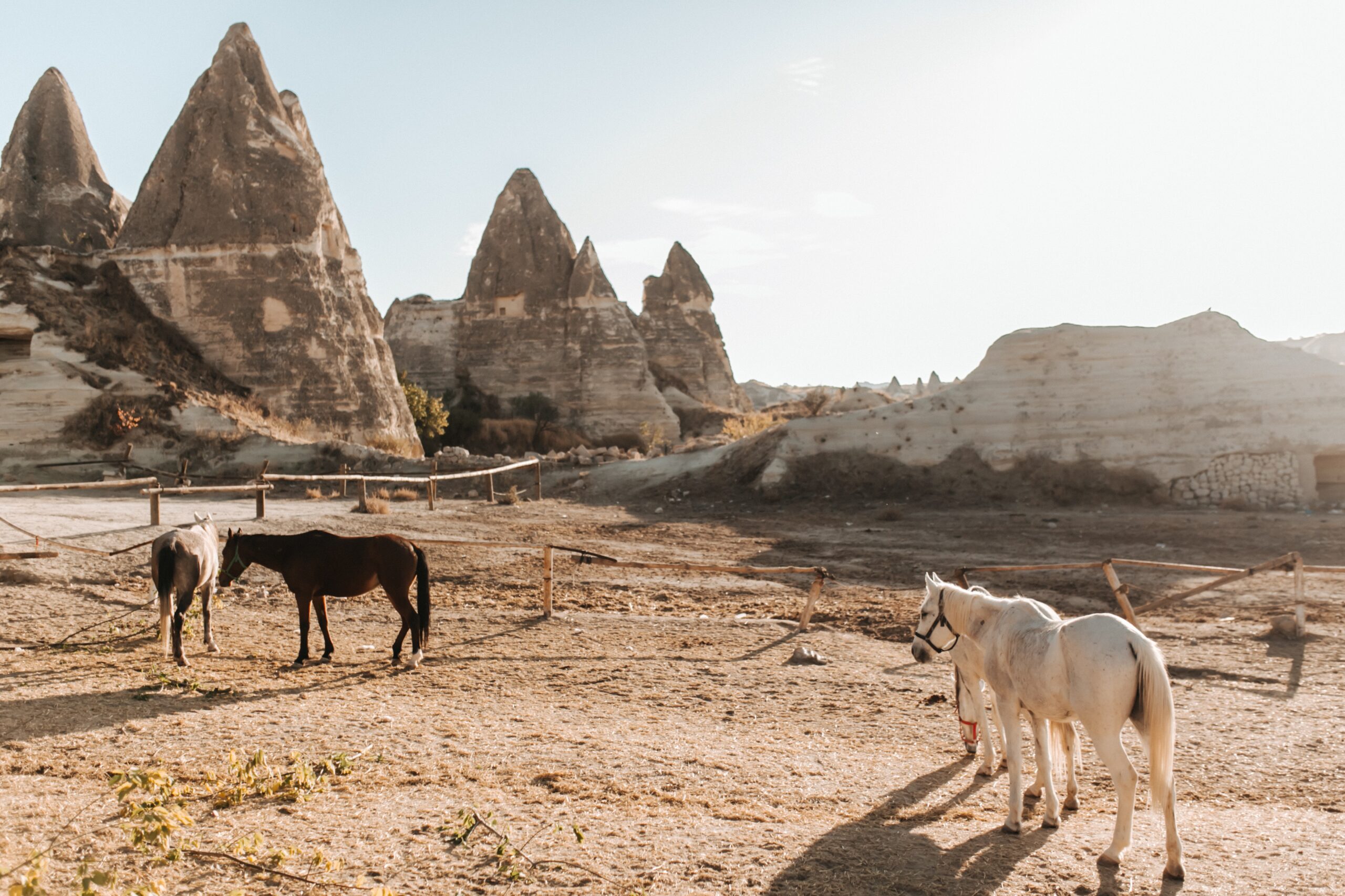
Along the way, we’ll see traces of this remarkable history — both from the saddle and during visits to chosen sites and attractions. Cappadocia’s distinctive, varied, and beautiful rock formations are far more extensive than they look in brochures, and they hide countless hidden structures. Rock-cut hideouts, storerooms, homes, cave complexes, and even entire towns are genuinely impressive. Many of them are still used in different ways today — from cave hotels and private homes, to vineyards, animal shelters (including stables), cultivation areas and storage spaces, as well as cafés and places to stop and rest.

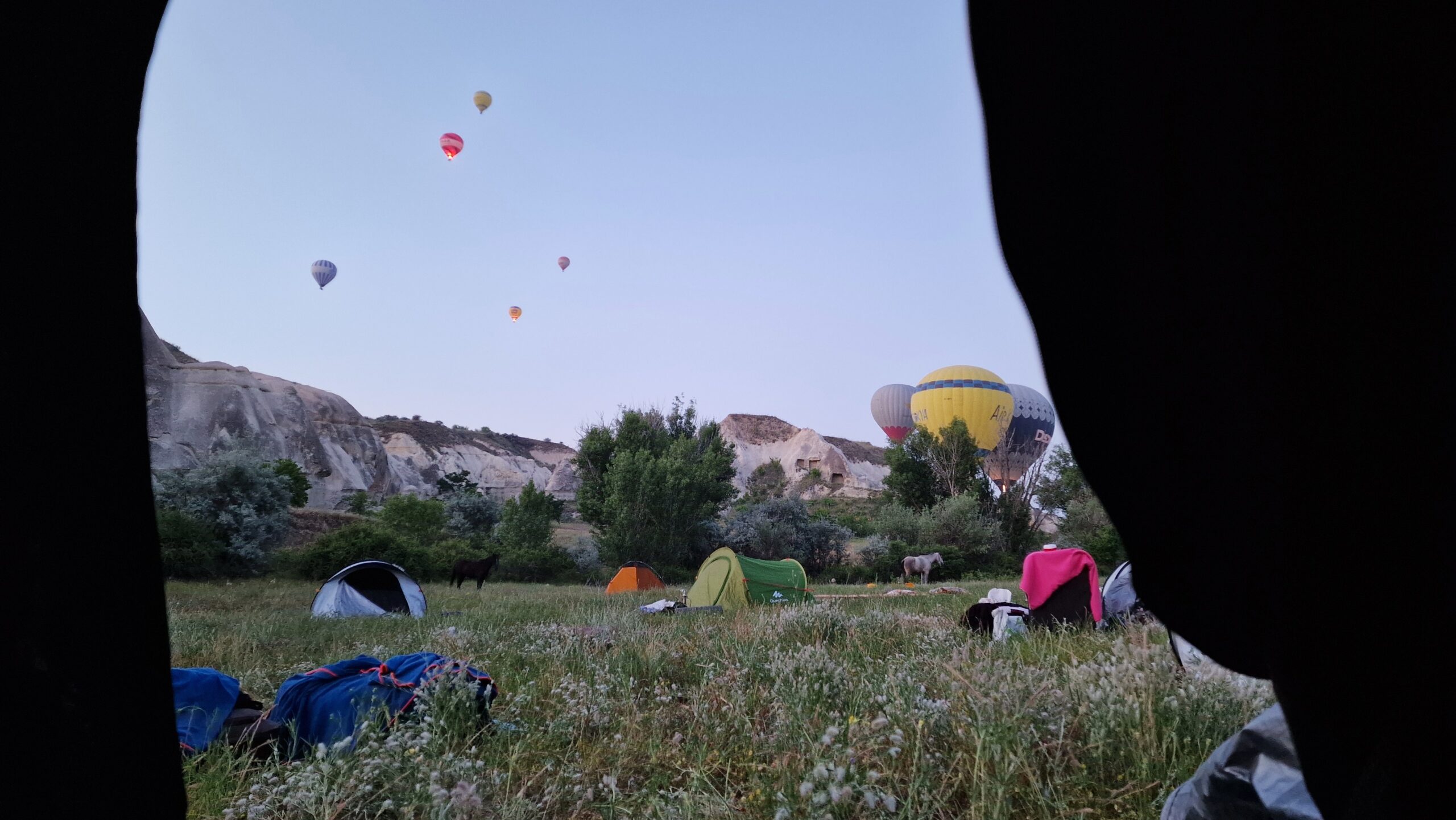
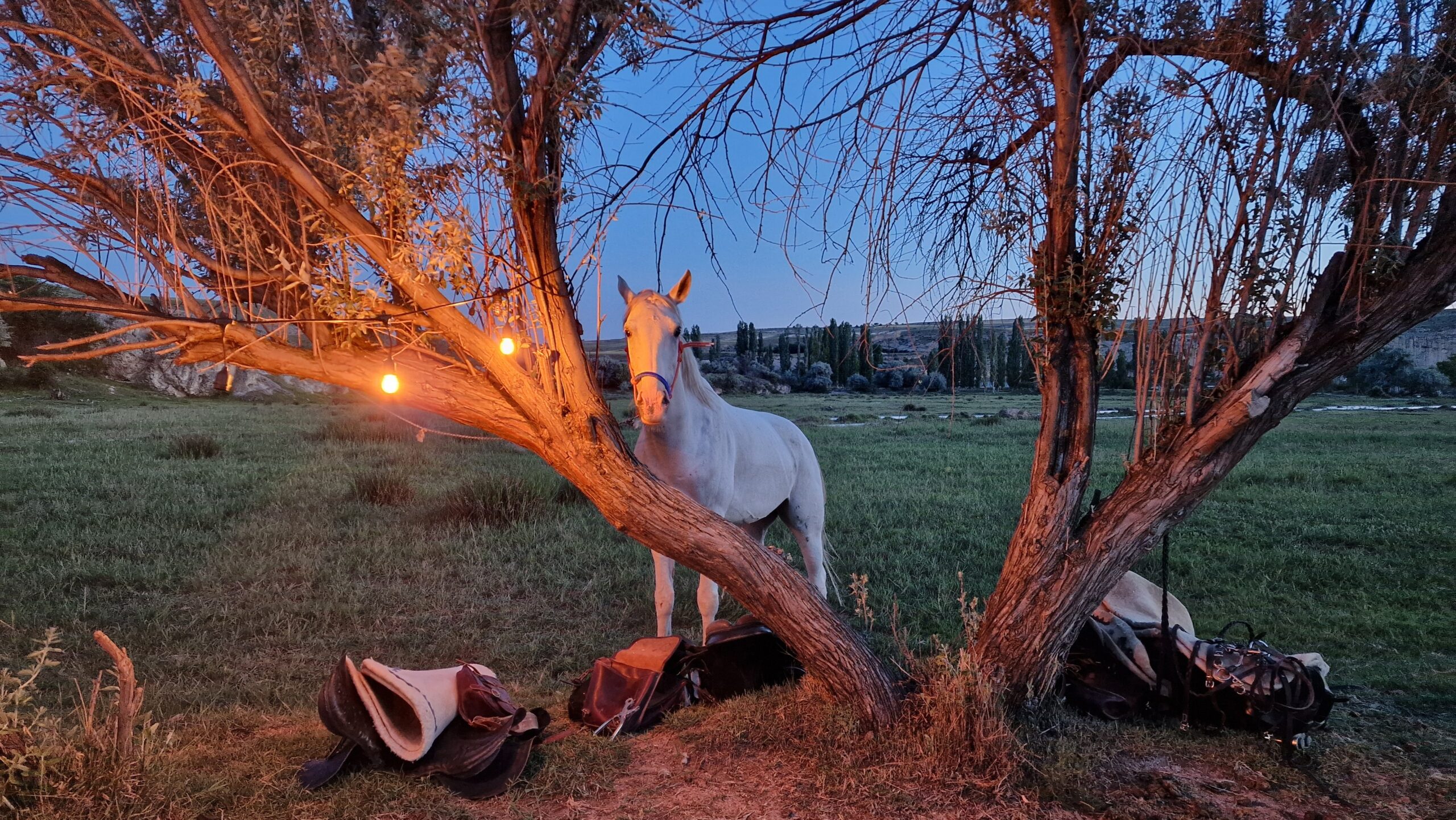
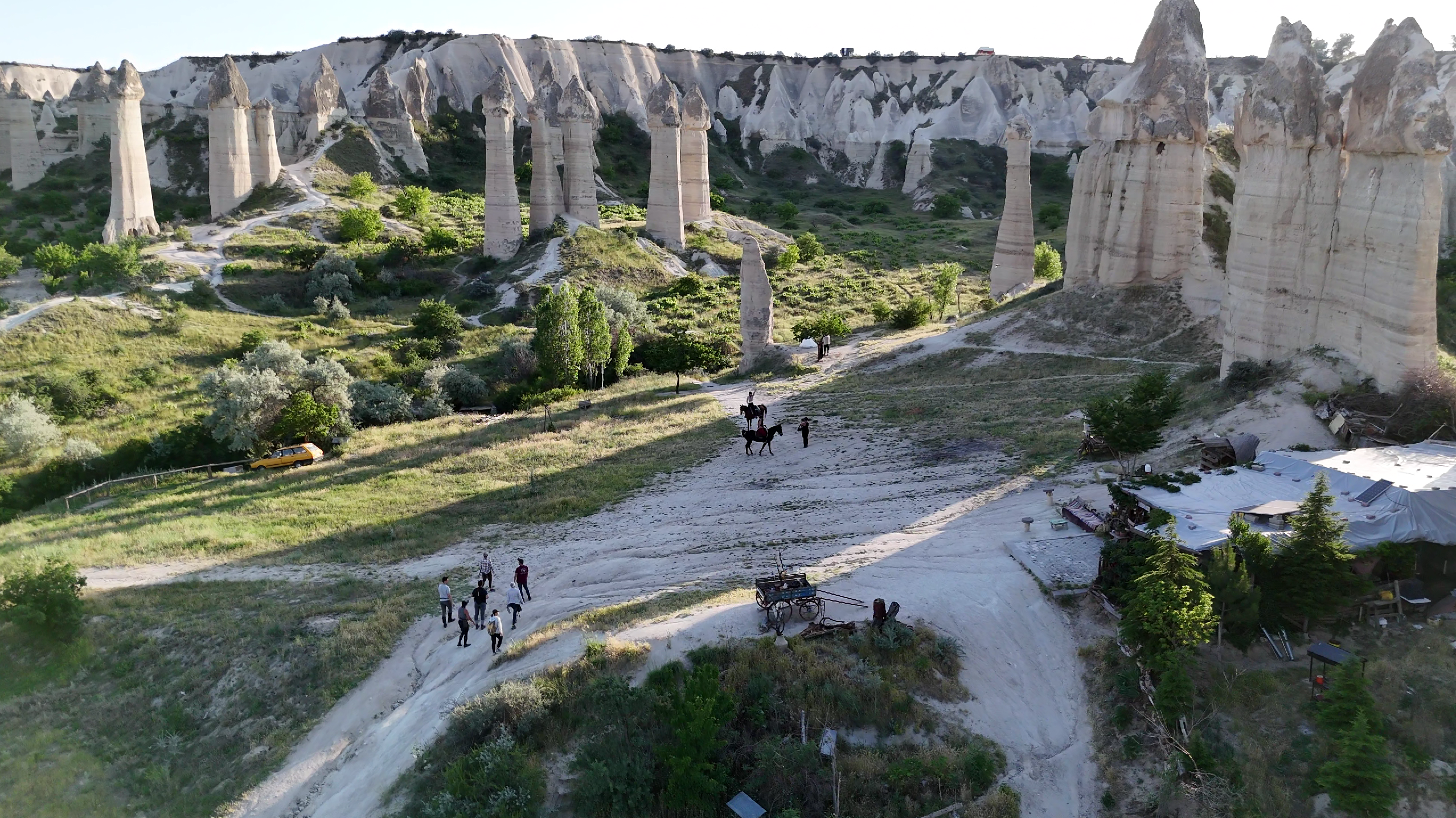
We’ll spend half the nights in small, family-run hotels in the area, and the other half camping in a few extraordinary places — with Love Valley being the highlight. Each camp spot has its own unique atmosphere and charm.

We’ve also planned a rest day during the ride. While our horses take a break, we’ll head out to explore some of the incredible places Cappadocia has to offer. It’s impossible to see even a fraction of them in a single week, but we’ll visit a handful of particularly interesting spots to get a real sense of the region. Surrounded by the area’s remarkable landscapes, we’ll talk about its geology, history, and heritage, and explore some fascinating rock-cut sites. We’ll also pop into Avanos, home to a remarkable pottery workshop.

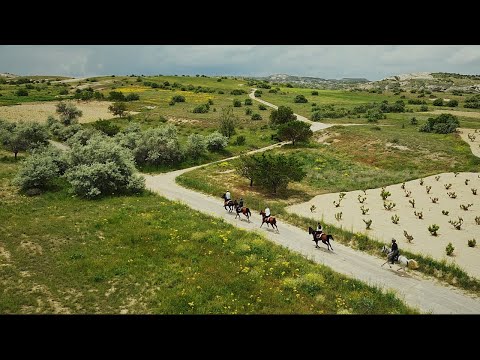
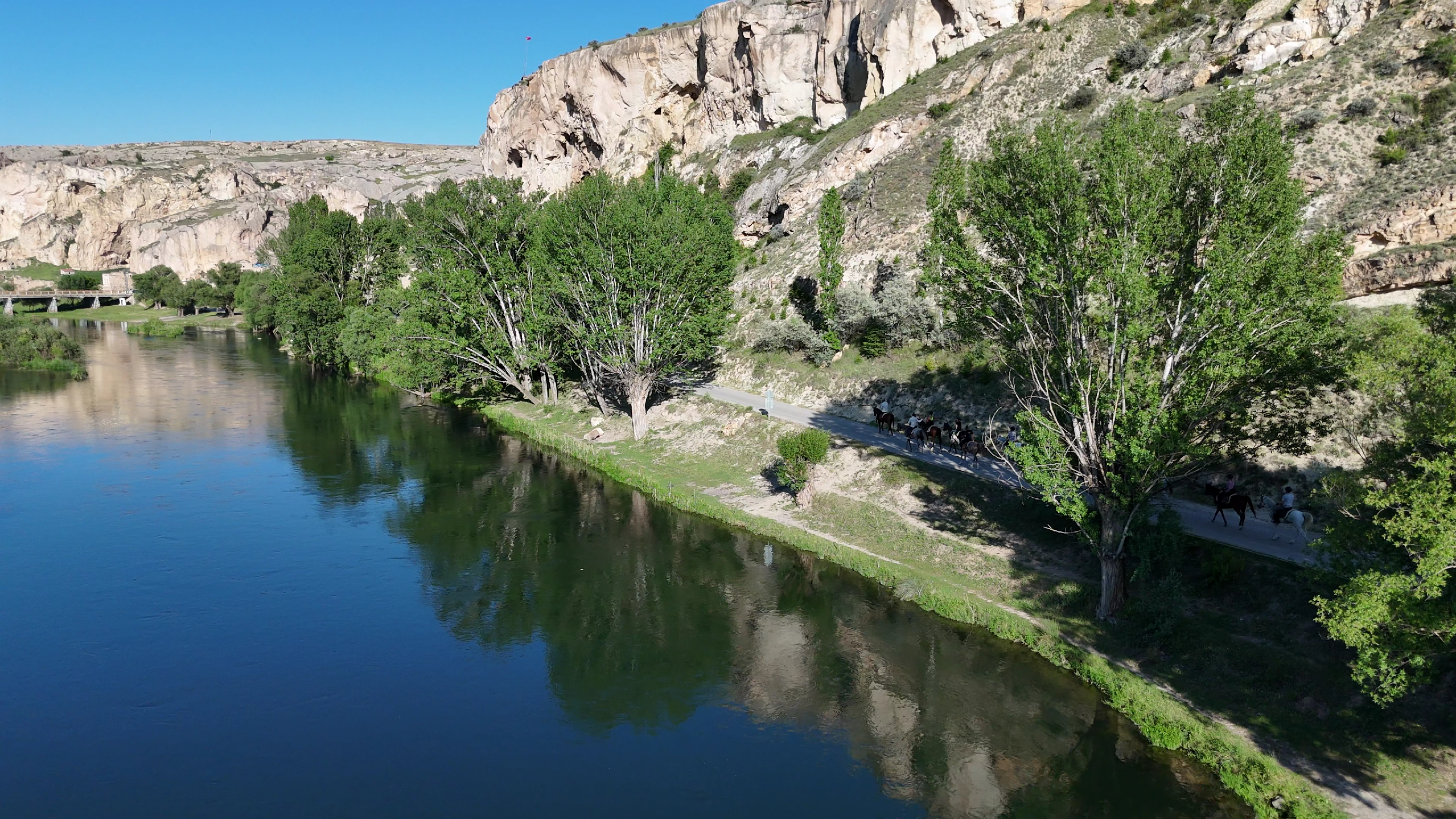
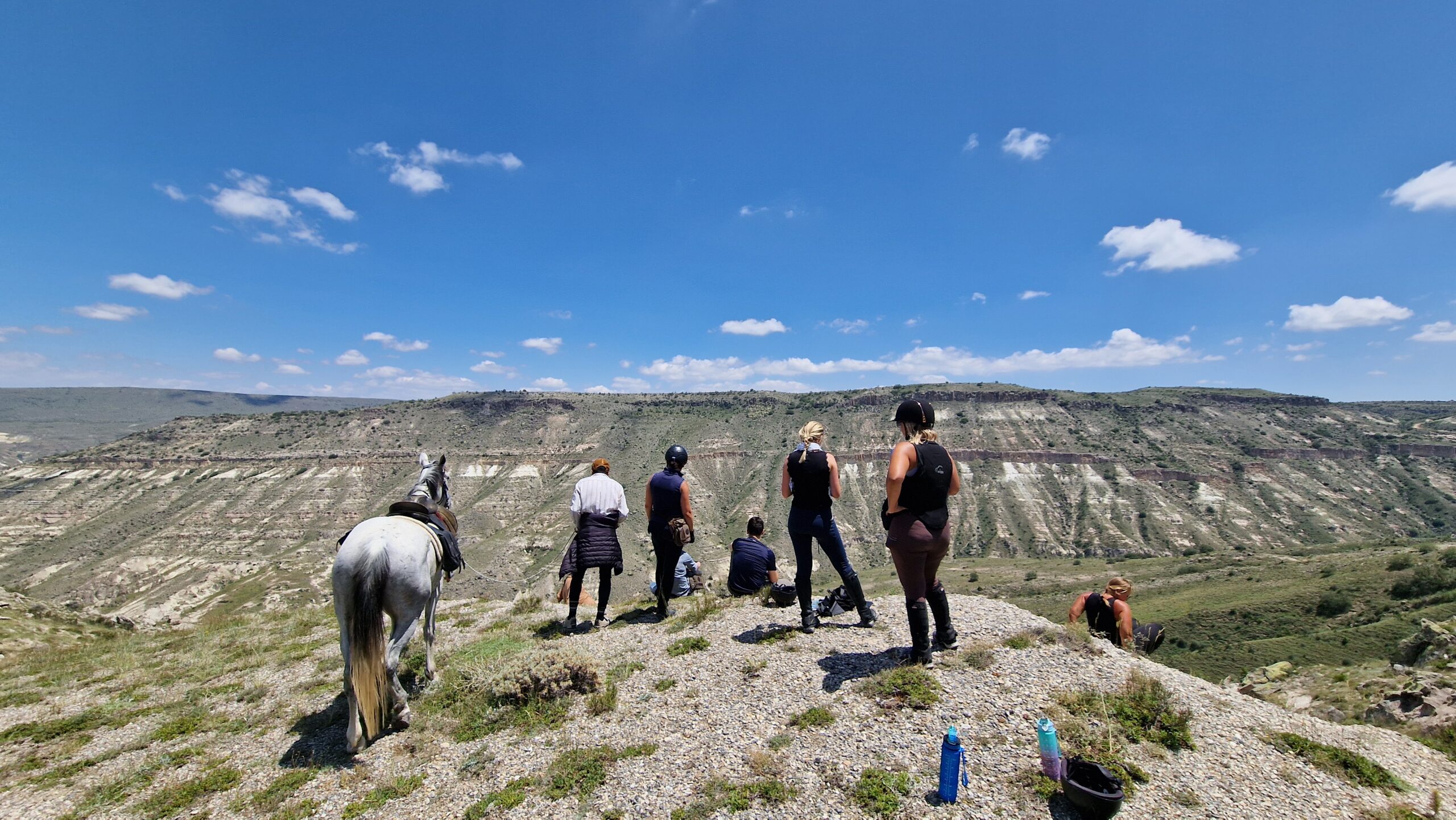
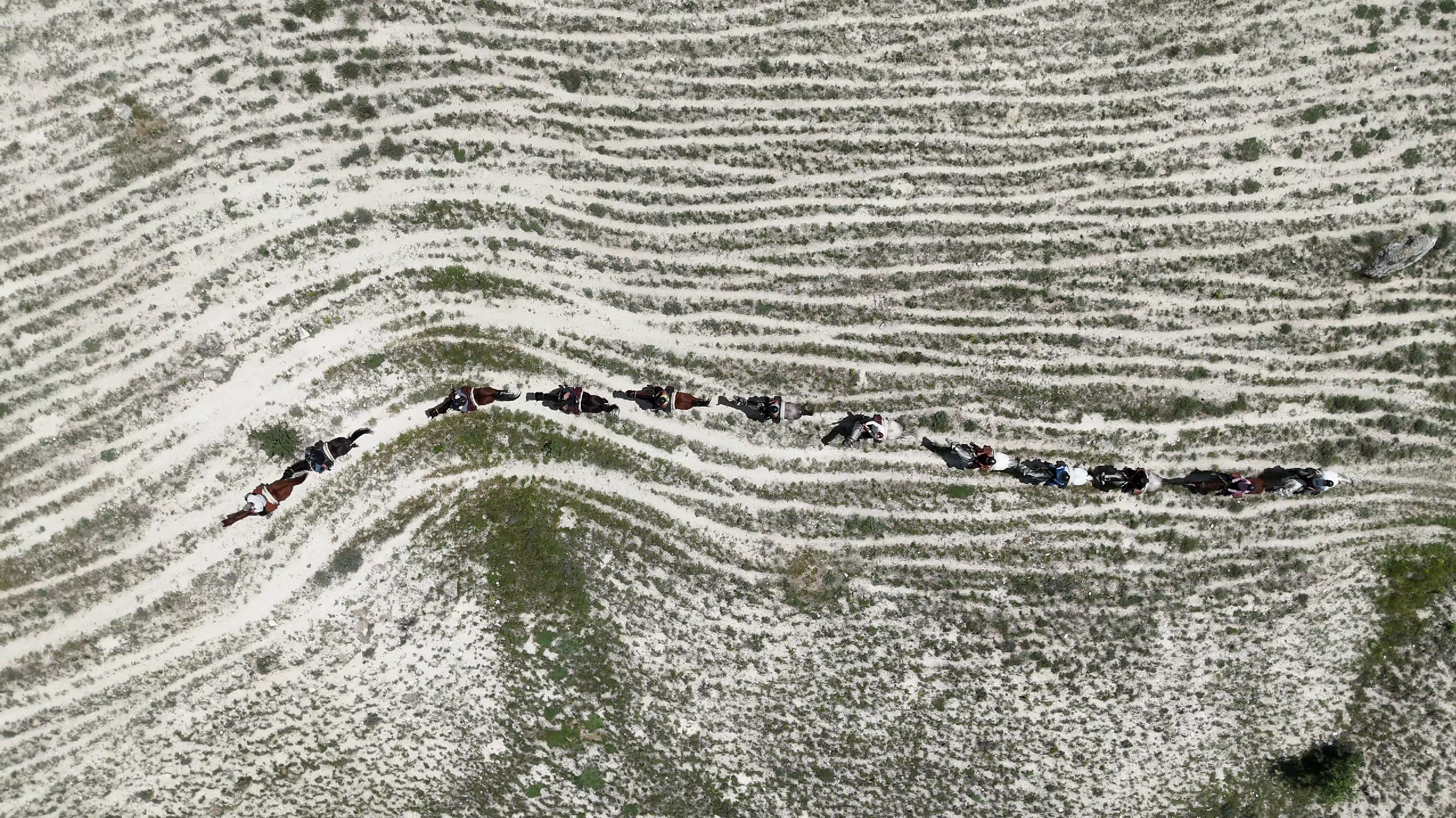
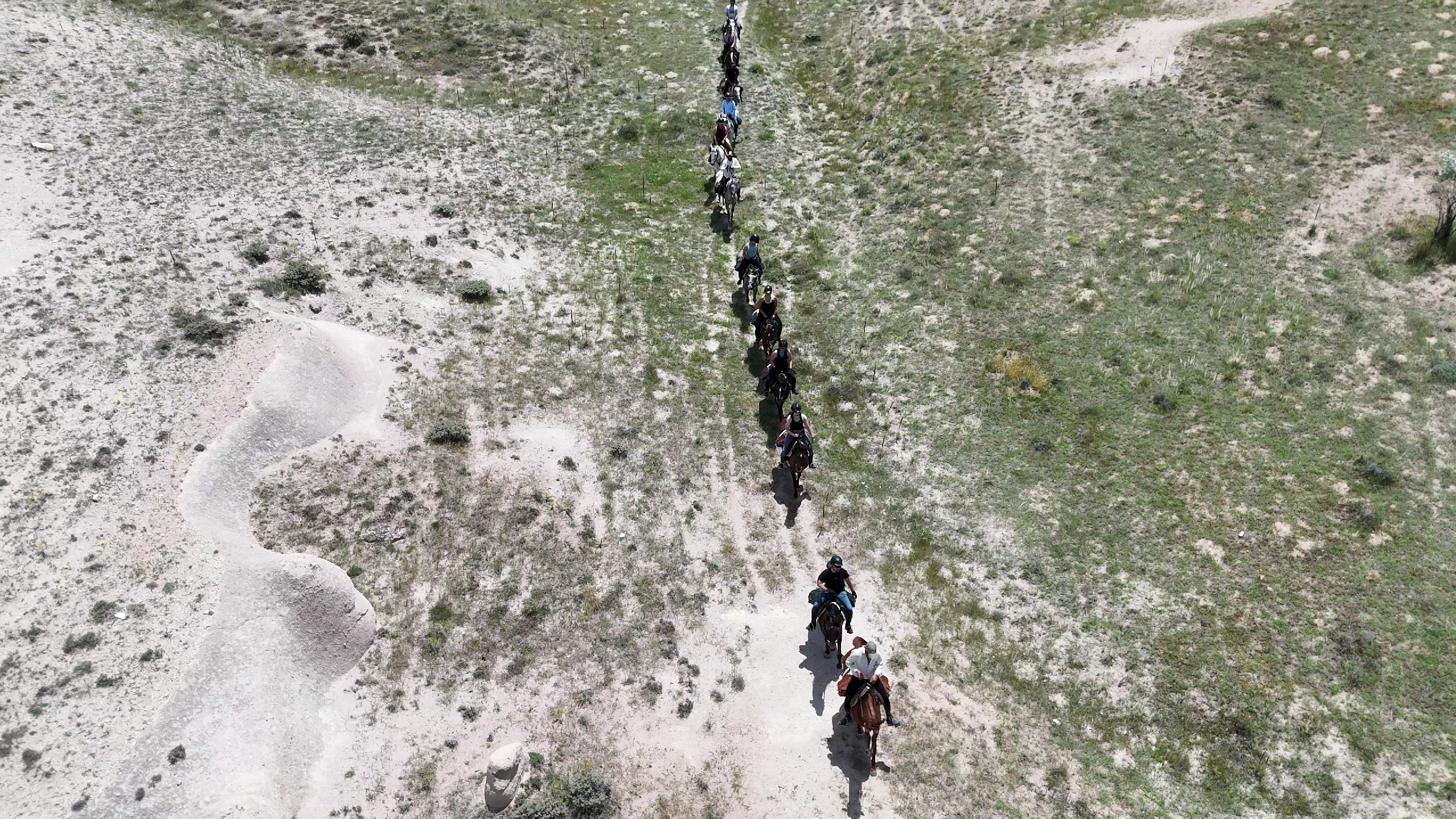
This ride is designed for confident riders, comfortable on energetic horses and in varied terrain. The route takes us through constantly changing surroundings — from weaving between surreal rock formations, to riding off-road, crossing small streams, orchard tracks and farm roads, and even riding through the streets of lively towns and sleepy villages.

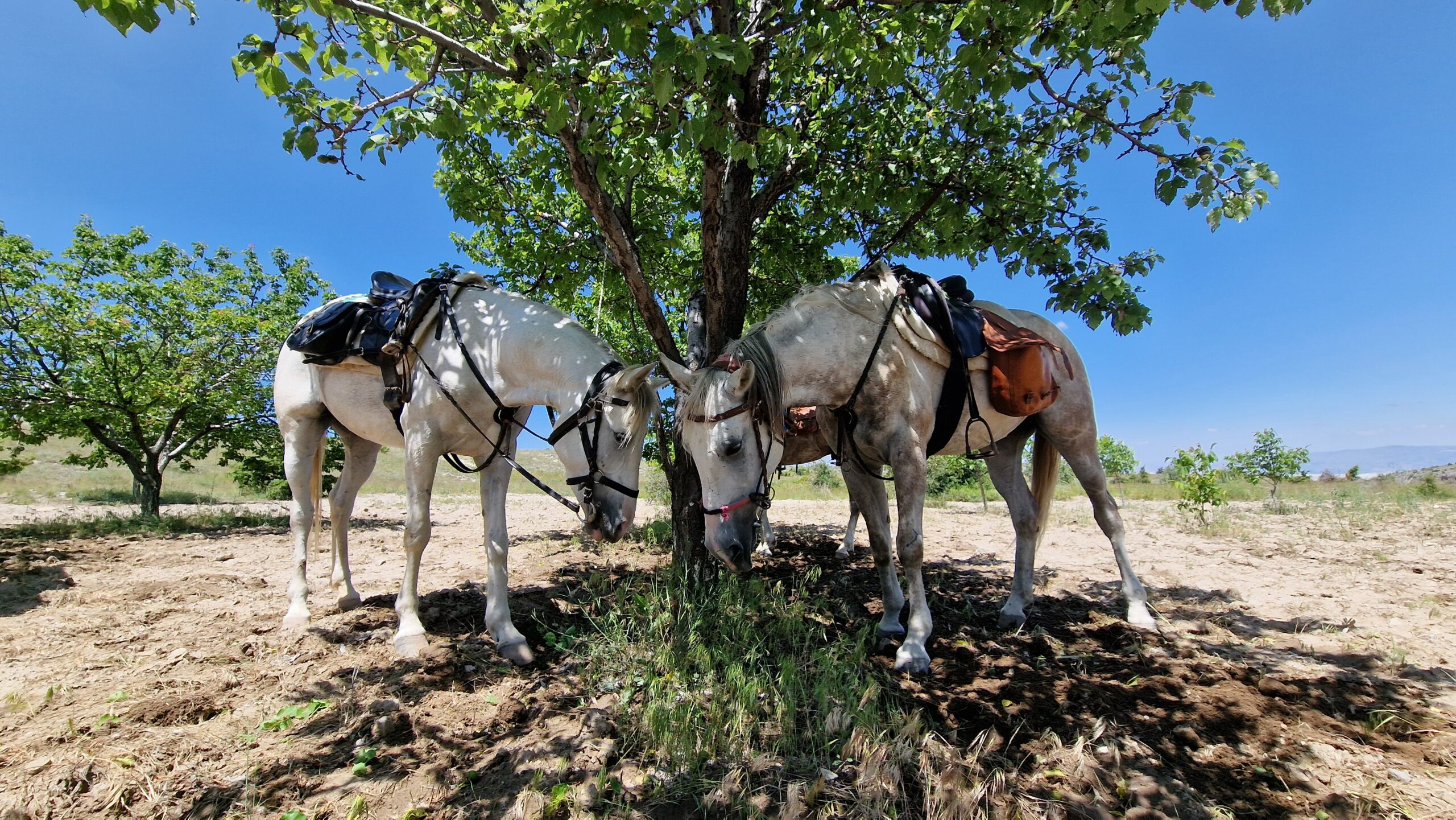
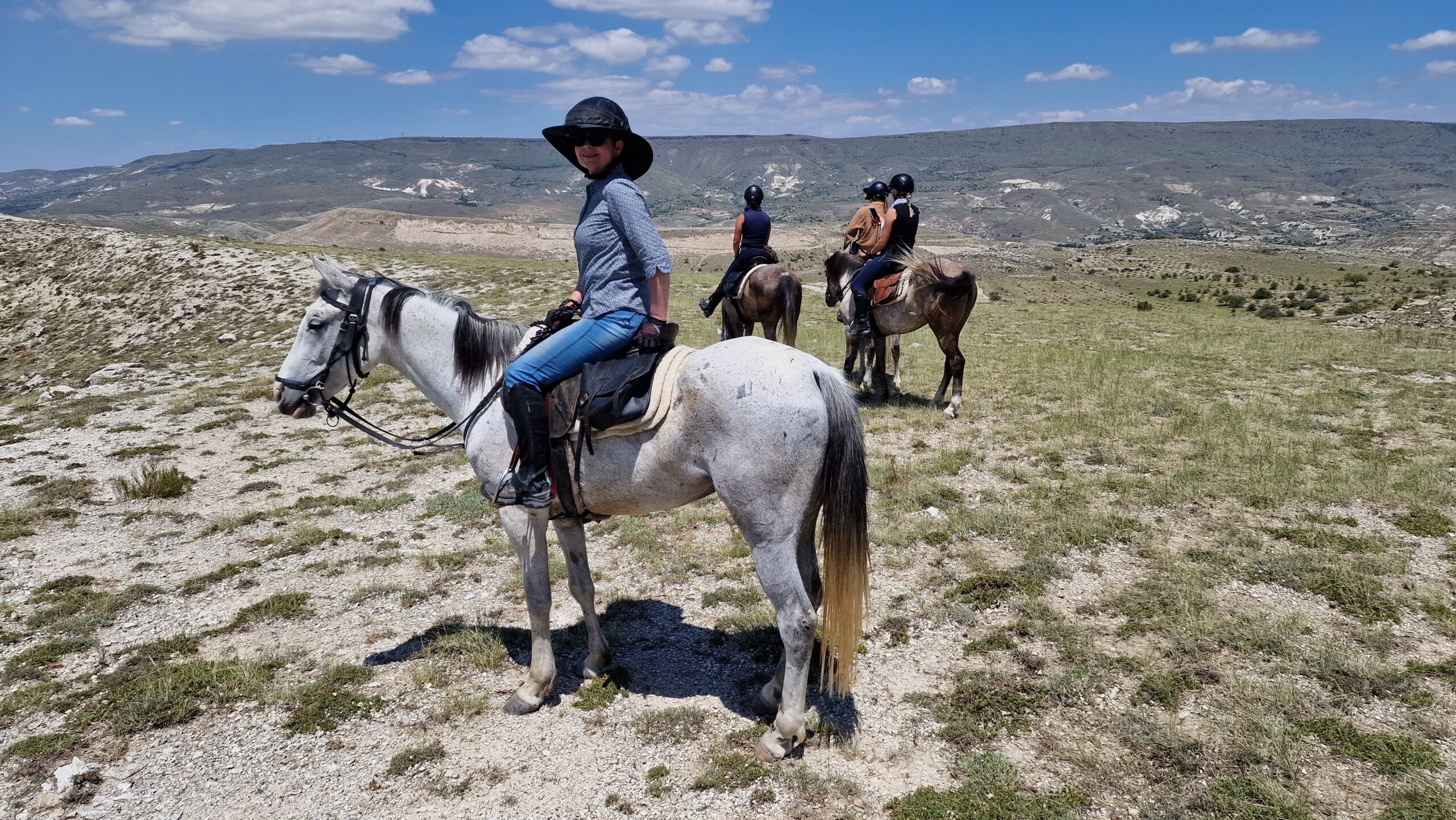
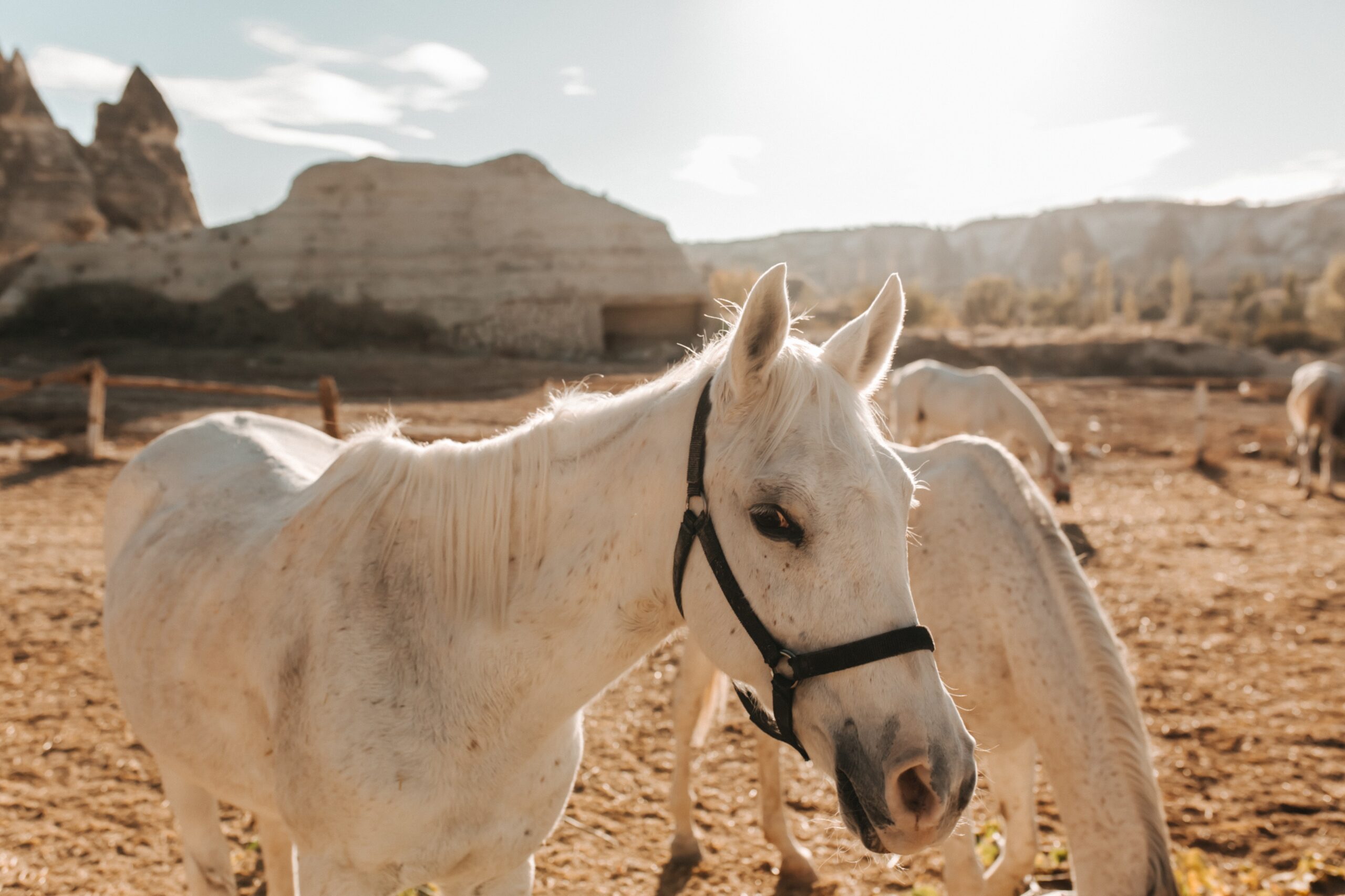
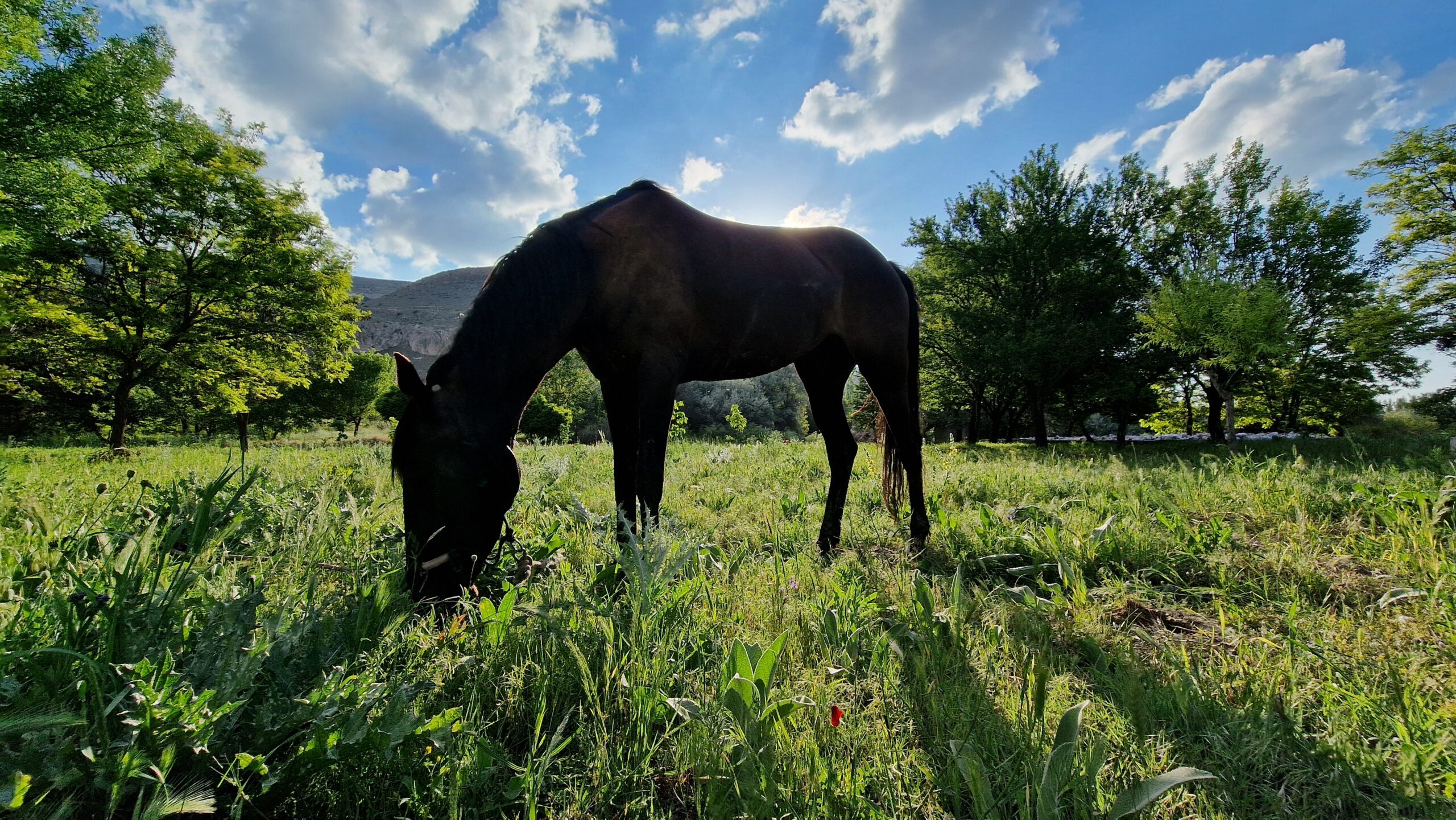
During the ride, we’ll be riding Arabian mares and Arabian–Karachay crosses. The horses are willing, energetic, quick and agile, and can be a bit more demanding. They’re well prepared and well trained for trail riding, but by nature they’re active and very much have opinions of their own.

The rider weight limit for this ride is 90 kg.

What is included in this tour?Items that are included in the cost of tour price.
  • Horse with full tack and equipment
  • 4 nights in hotels in Göreme and on the trail
  • 4 nights tenting
  • All meals
  • Transfers to and from airports in Nevsehir or Kayseri (group transfers)
  • Horsemen and guides during the entire ride
  • English-speaking, local pilot/guide during the entire tour
  • Luggage / kitchen / shower car assisting the group
  • Tents and sleeping mats for tening/camping nights
  • Sightseeing – selected heritage and culture spots
  • Tourist insurance covering high-risk sports
What is not included in this tour?Items that are not included in the cost of tour price.
  • Flight tickets to and from Nevsehir or Kayseri
  • Minor personal expenses (souvenirs, additional snacks and alcohol, admission tickets, etc.)
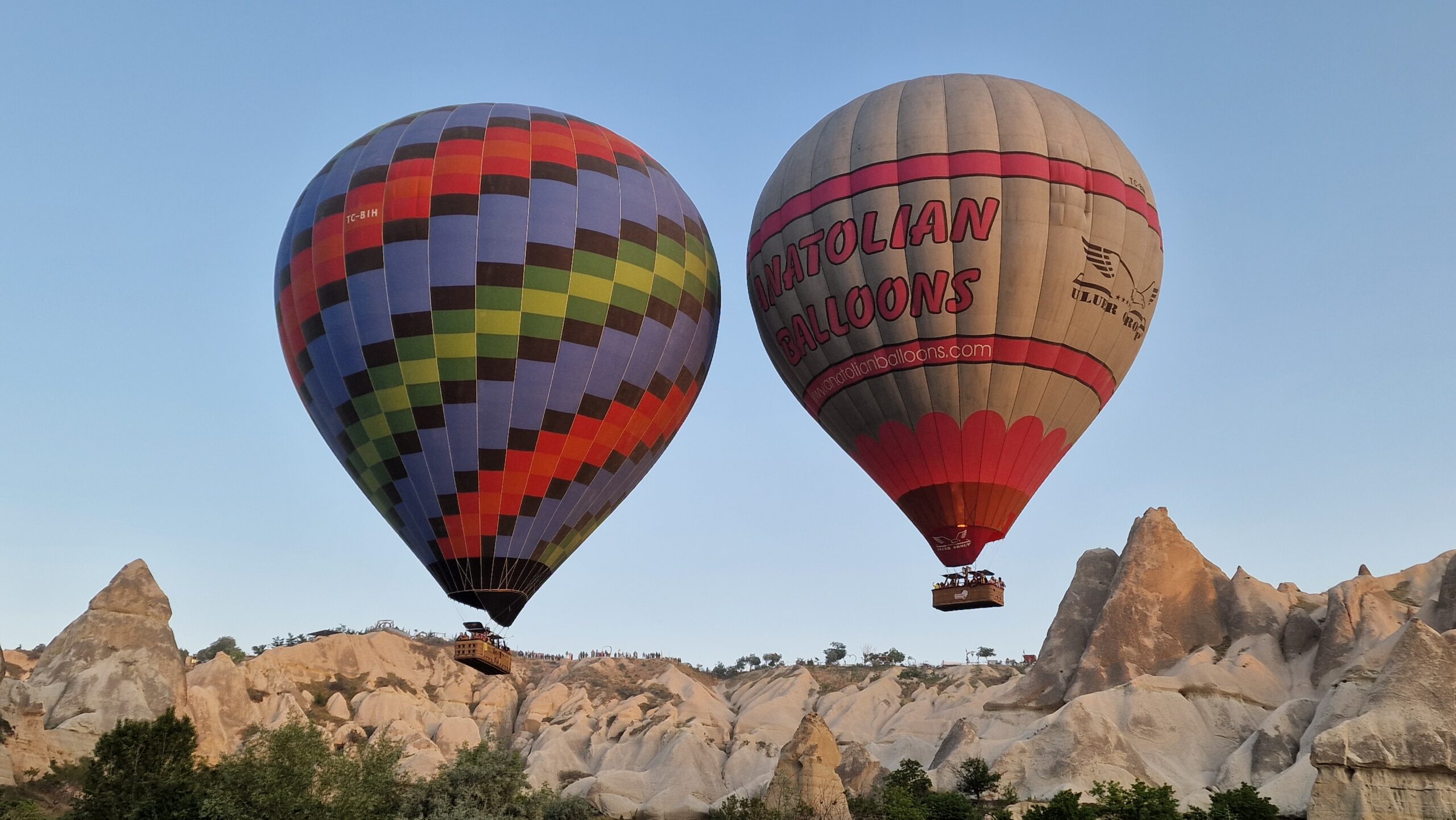
  • Hot air balloon flight – upon earlier request (around 250 Euro per person)
  1. Day 1 Arrival

    Riders arrive in Cappadocia. The best option is to fly to Nevşehir Airport, though there are sometimes good connections to Kayseri as well. We’ll arrange transfers for everyone to a remarkable ranch in Göreme. There we’ll meet the horses and part of the riding team, and there’ll be time for a welcome drink. We’ll then drive to the hotel to drop off luggage and freshen up, and in the evening we’ll head to the stables for a welcome dinner.

  2. Day 2 Unusual rocks and wild horses

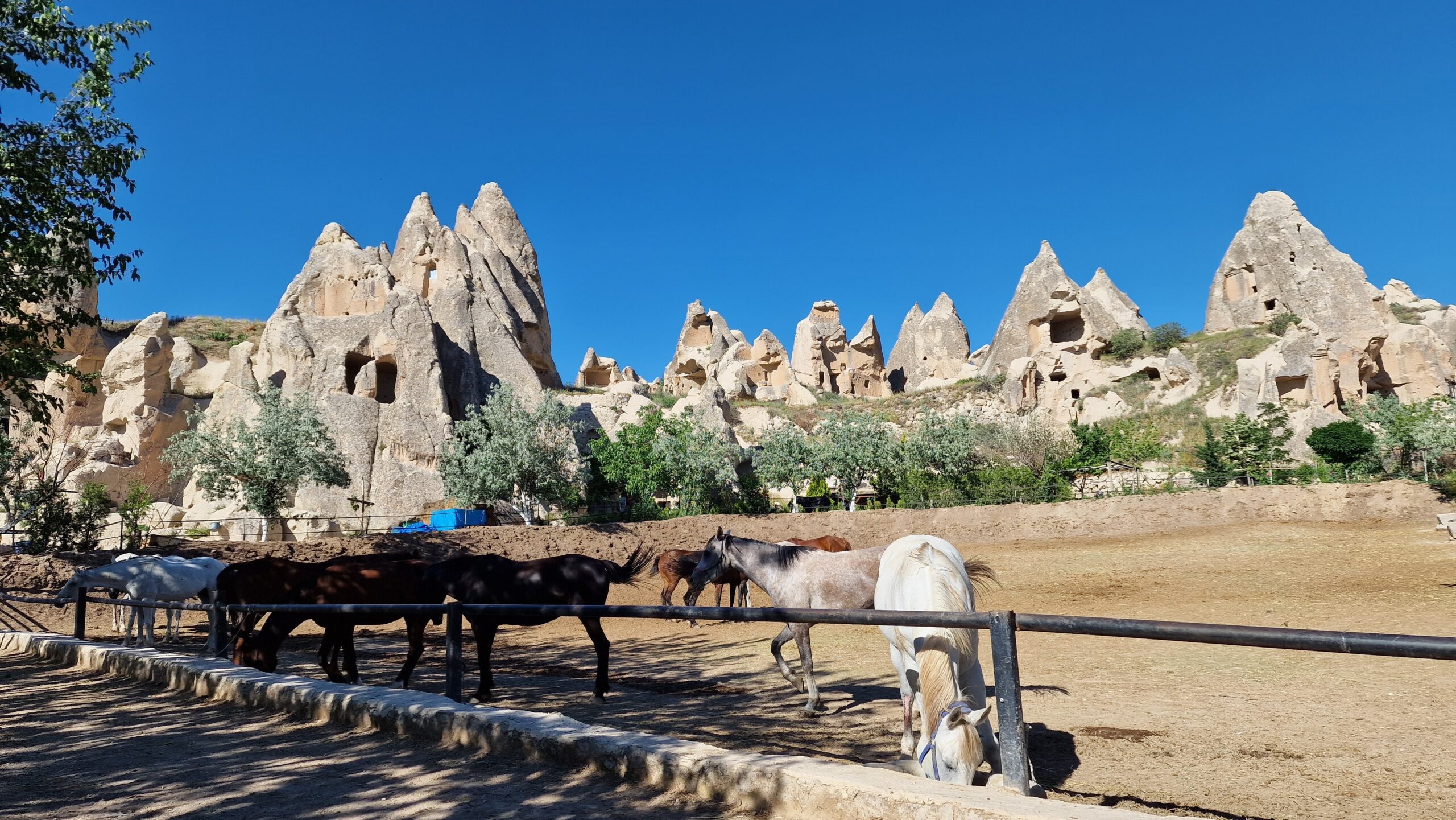
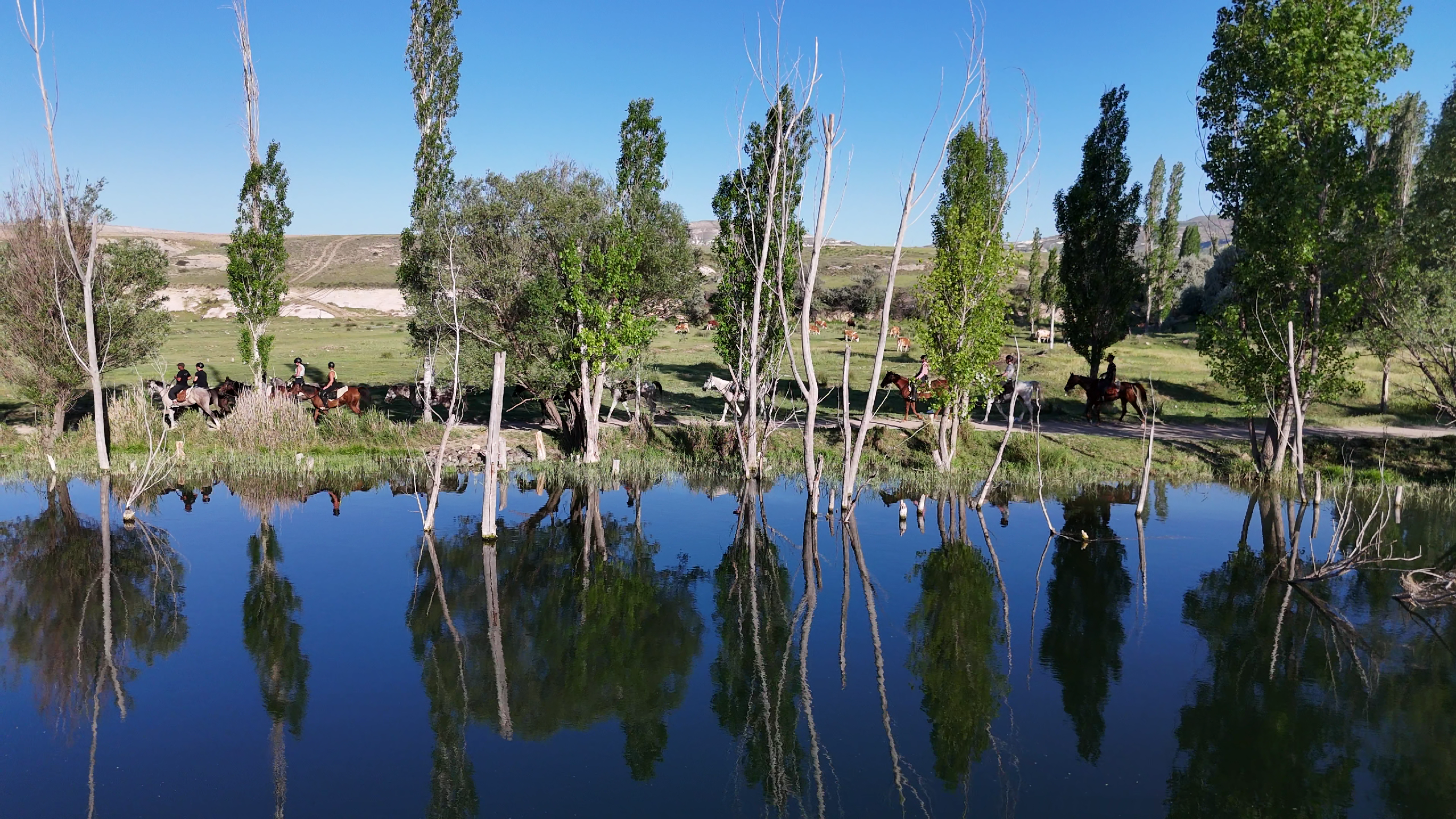
    After breakfast riders will be taken to the stables. The place is absolutely one of a kind, and we’ll have time to wander around and take it all in. Shortly afterwards, we’ll meet the horses and try to match them with riders. We’ll do an introductory warm-up ride to get to know them, and in the afternoon we’ll break for lunch. Towards evening, we’ll head out for about four hours in the saddle to take in the surreal rock formations from horseback for the first time. We’ll also ride out to Yılklı — a herd of wild horses. In the past, people who needed a horse but couldn’t afford to feed it through the winter would release their horses so they could fend for themselves. Over time, the horses bred naturally, formed herds, and today they live wild or semi-wild. We’ll catch the sunset on the way — and Cappadocia sunsets are genuinely stunning. After that, we’ll return to the stables and head for dinner. We’ll spend the night in tents, camping… on a rocky summit above the stables, with access to a bathroom at the ranch.

  3. Day 3 Colourful, Imagination and Love Valleys

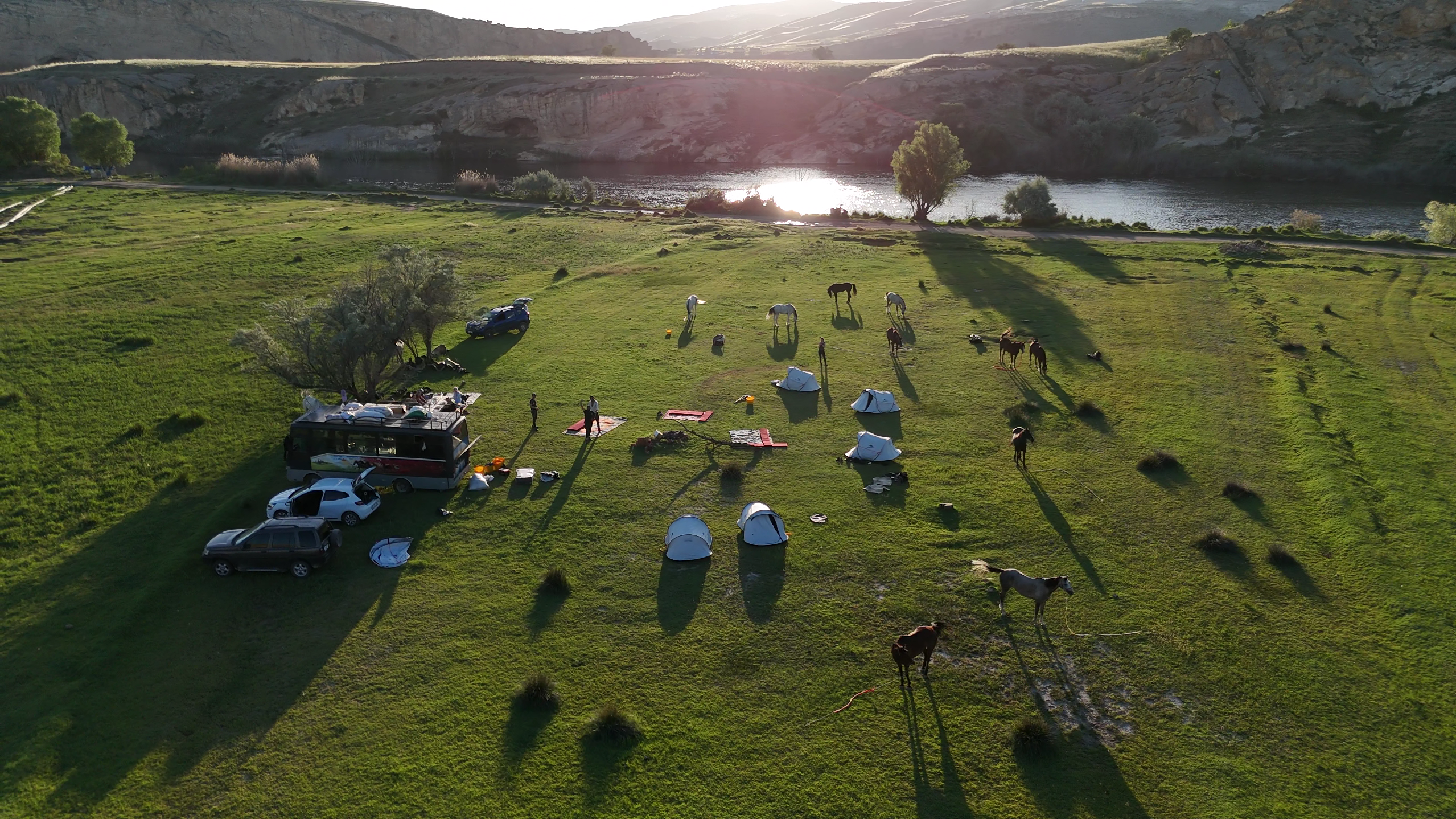
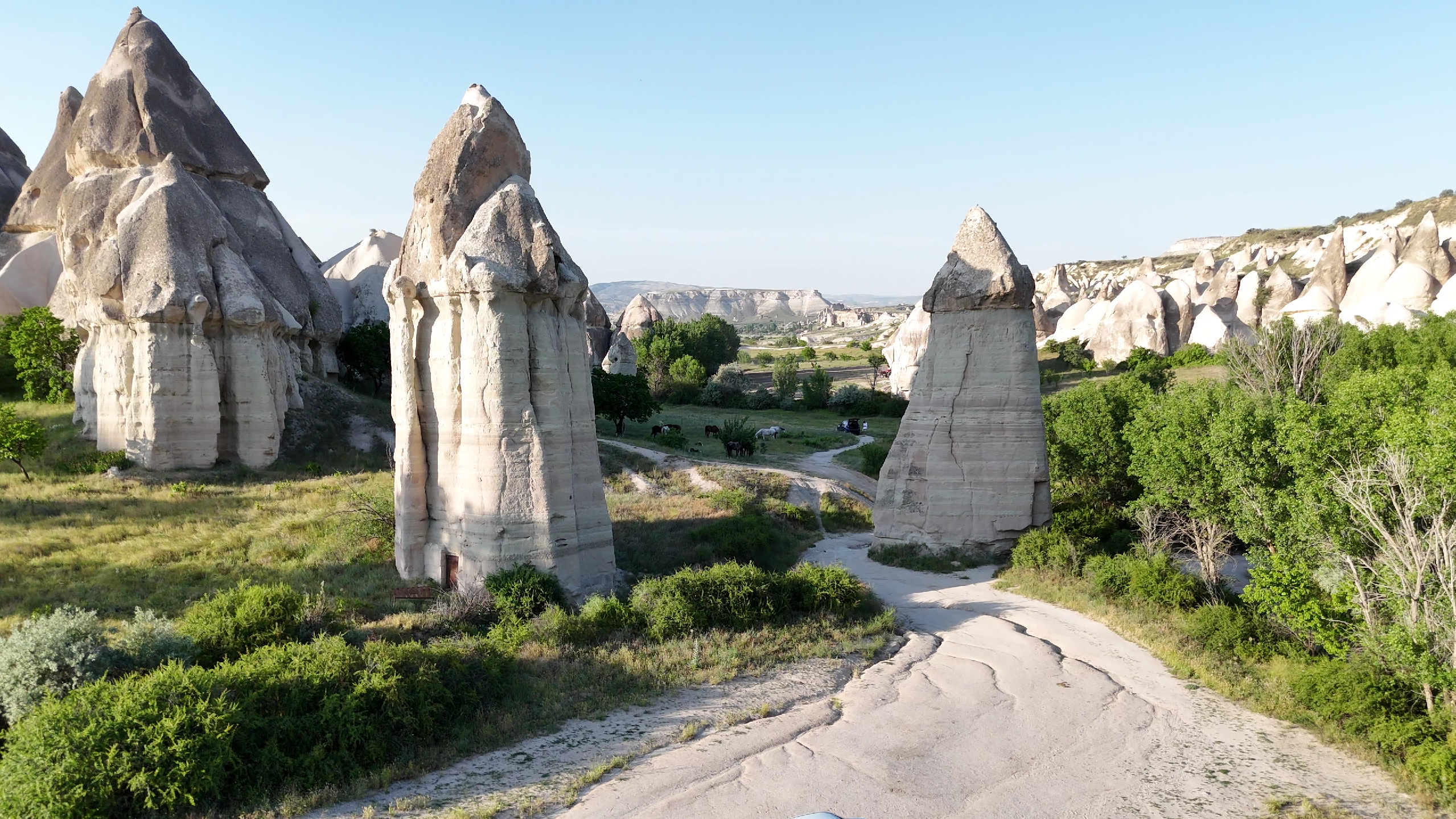
    After breakfast at camp, we’ll set off. The first part of the trail takes us to Sword Valley, named after its sharp rock formations, as well as its ancient cave dwellings. Next, we’ll ride into Rose Valley, where the rocks change colour depending on the time of day. A bit further on, we’ll reach Red Valley, one of Cappadocia’s most famous spots. From there, we’ll head up towards Mount Ak and descend into Devrent Valley (the “Valley of Imagination”), where we’ll stop for lunch. The next stretch takes us through the area around the town of Karayazı, with a lovely panoramic view over the region. We’ll then drop down to the Red River and follow it for a while until we reach Love Valley, with its unusual rock pillars that tend to spark some rather naughty associations. For the night — depending on the weather — we’ll camp either in Love Valley or in Zemi Valley. There we’ll unsaddle the horses, set up camp, and in the evening we’ll sit down for the first of the fantastic camp dinners along the route.

  4. Day 4 Balloons, pigeons and a Greek village

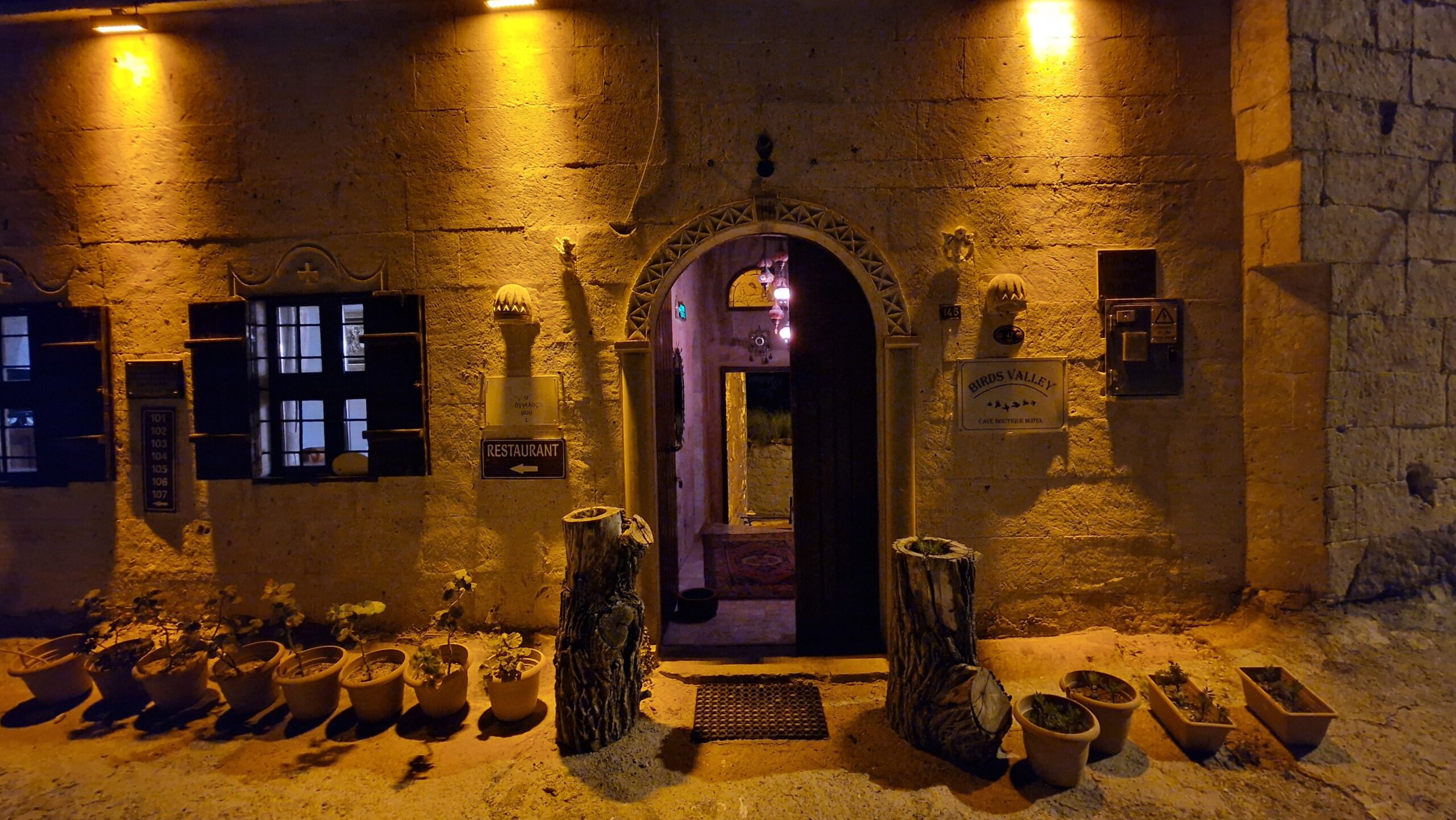
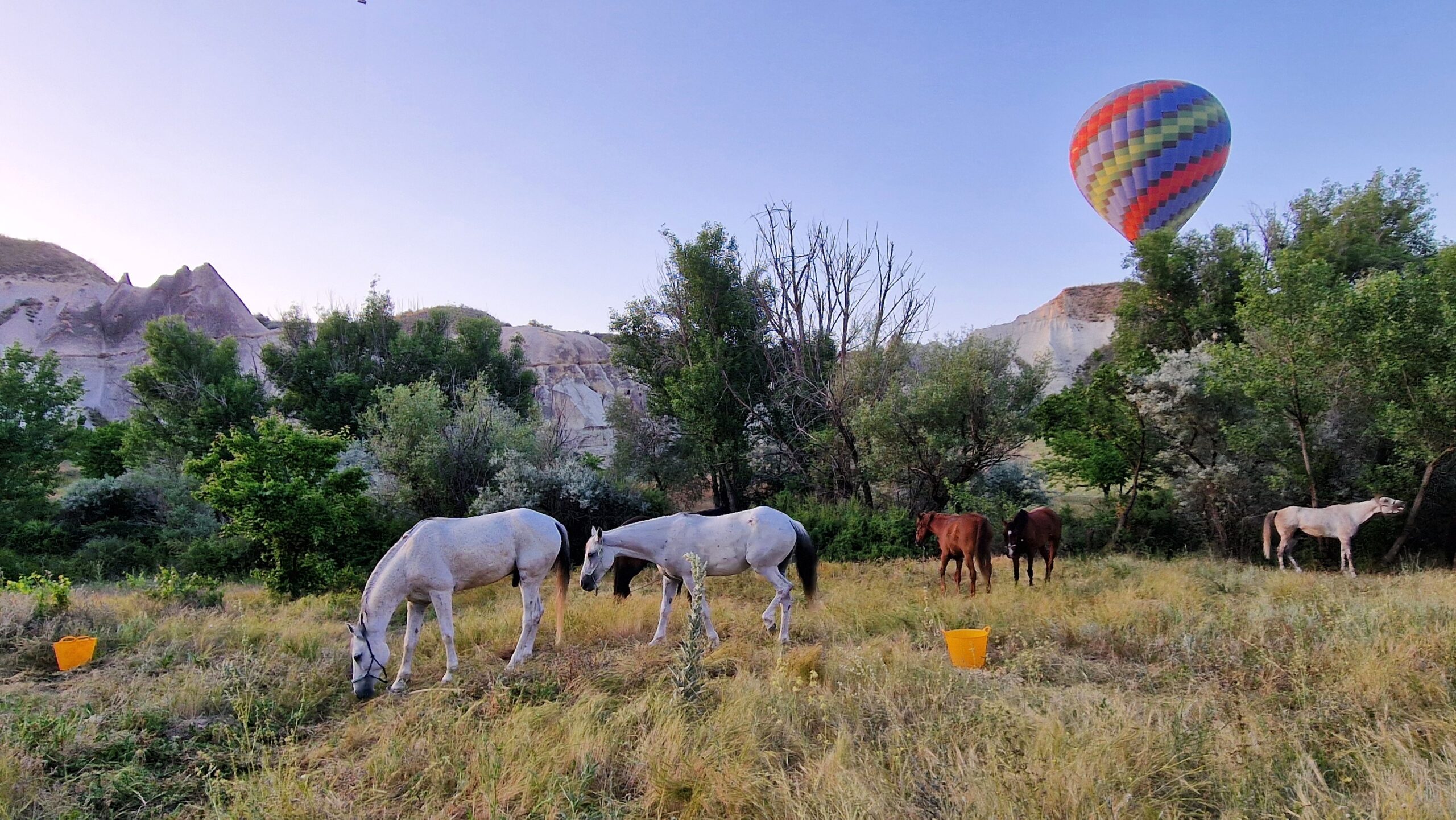
    It’s well worth getting up early to watch the sea of balloons drifting above our camp. The views are incredible and more than make up for the early start. After soaking it all in, we’ll have breakfast at camp, saddle up, and set off. We’ll start by riding through the scenic area around Büyük Harap. Around the middle of the day, we’ll ride into town and stop for a break and lunch right beneath the extraordinary stone fortress in Uçhisar. We’ll also climb up to the top to take in the panorama. Once we’re fed and rested, we’ll ride through town and on into Pigeon Valley. Its rock hollows and caves — including many dovecotes carved by human hands — are home to thousands of birds (not only pigeons). From there, the route takes us towards Mount Gemil and then down into the Kavak Valley. In the afternoon, we’ll reach the ancient Greek village of Babayan. We’ll have dinner at a local traditional restaurant, and spend the night in a charming, family-run cave hotel carved into the rock.

  5. Day 5 The heritage of Cappadocia

    Today our horses get a well-earned rest, and we head out to see some of the region’s best highlights. We’ll go for a short walk among the surreal rock formations, which is a great chance to chat about the area, its landscape, and its history. We’ll visit one of the oldest churches in the region and an extraordinary open-air museum. We’ll stop for lunch along the way, then head to Avanos, home to a brilliant workshop producing traditional pottery. There’ll also be time for a bit of shopping. 🙂 In the late afternoon, we’ll return to Babayan for dinner and another night in the family-run rock hotel.

  6. Day 6 Churches in the rocks

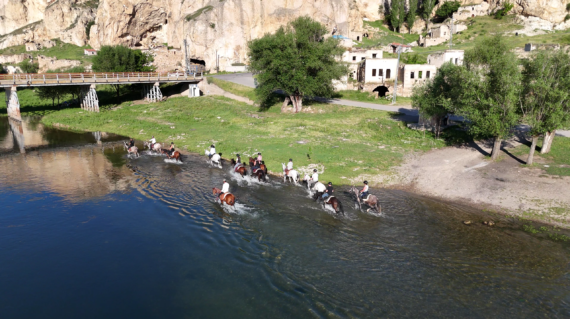
    After breakfast in town, we’ll head to our horses and leave the Greek village behind. Our first stop today is the Pancarlık Church, which has been in use for 1,400 years. From there, the route takes us to the lovely Uzengi Valley, with its slightly “lunar” feel and huge dovecotes built into the rocks. Pigeon keeping in Cappadocia dates back to the 9th century, and their droppings are still used to this day. Next, we’ll ride on into the Gomeda Valley, best known for its remarkable rock-cut church. We’ll stop for lunch, then continue to the picturesque Greek town of Mustafapaşa. From there we’ll head towards Gölgölü Valley, another of the striking landscapes on our route. Soon after, we’ll reach Lake Damsa, where the camp crew will already be waiting for us. We’ll take care of the horses, rinse off the dust, sit down for dinner, and spend the night tenting.

  7. Day 7 Healing waters

    We’ll start the day with breakfast at our lakeside camp. After the usual morning bustle, we’ll saddle up and set off. Today’s route takes us between charming villages, ancient churches, and historic monasteries that make up part of the region’s rich heritage. Our first destination is the village of Cemil, known for its stone houses and a historic Ottoman-era church. Next, we’ll head to the Keşlik monastic complex, tucked away among the rocks, where we’ll stop for a break. The next section of the trail takes us on towards the sleepy village of Yeşilöz and the beautifully situated town of Karain. On the outskirts of Karain, we’ll set up our final camp of the trip, enjoy a delicious dinner, and spend the night there.

  8. Day 8 Ortahisar Valley

    After breakfast, we’ll head towards the hills of Karain and Avla. From there, we’ll ride on to the town of Ürgüp, whose old town is dotted with charming rock-cut houses and local shops. Next, we’ll enter Ortahisar Valley to take in yet more of Cappadocia’s extraordinary rock formations. We’ll reach the Hallaç Monastery, where we can go inside to see its remarkable frescoes. From there, we’ll turn towards Çiftlik, covering the final kilometres at a gallop. Once we arrive, we’ll thank our wonderful horses and say goodbye to them. We’ll freshen up at the hotel, then head to the ranch for our final farewell dinner.

  9. Day 9 Farewell to Cappadocia

    It’s time to leave magical Cappadocia. Riders will be transferred to the airport for their flights.

The guide might modify the route according to weather conditions and group's riding skill.
fot. Selim Şendal

We’ll spend half of our nights in small, local, atmospheric hotels along the route. Rooms are twin-share and usually come with en-suite bathrooms, although in a few places facilities may be shared.

The other half of the nights — alternating with the hotel stays — we’ll be camping in tents. One night we’ll camp right above the ranch, with access to a bathroom and toilet at the stables. The remaining three nights will be spent a bit further away from civilisation. We provide tents and sleeping mats, and during the three camping nights out on the trail we’ll be joined by a (very cool! 🙂 ) support minibus with a field kitchen and a toilet/shower.

Turkish food is rich, varied, and seriously delicious. We’ll get to taste real Turkish flavours — not just the kebabs known in Europe, but above all the tasty, wholesome dishes prepared in a traditional, home-style way. Our colourful meals on the trail and at camp will be cooked for us by the families of our guides. On hotel nights, we’ll eat in small local restaurants, and our final dinner at the ranch will be prepared by local family cooks. Full board and soft drinks are included throughout the trip. On top of that, small tasting amounts of alcohol are planned during breaks and dinners.


Equipment

We use classical/English or Western saddles, depending on the particular horse and the riders’ preferences. The bridle is constructed traditionally, we use a bits. The equipment is no different from typical tack you’ll encounter in most European stables.

Additionally, each horse is equipped with smal saddlebags. We carry water supplies, lunch and other handy items in them. We recommend storing valuable items, such as your phone, documents or cash, in waist or hip bags or small backpacks.

What you should take with you?

Our rides in Turkey are fairly comfortable. We spend half the nights under roofs, in small hotels, so on those days we ride “lightweight”, taking only the essentials for the day in the saddle. For the nights spend tenting you’ll need to repack into a smaller, more practical bag — much better for camping than a suitcase (it’ll be transported by a car). During the camping part of the trip, a large support vehicle travels with us, fitted with a field kitchen as well as a toilet and shower.

A detailed packing list, along with our tips and recommendations, will be sent to all participants a month before the ride.

  • passport
  • cash, USD or EUR
  • electronic devices, e.g. cameras, powerbanks
  • flashlight; head flashlights are quite handy
  • sunscreen
  • sunglasses
  • helmet
  • personal riding gear and equipment
  • head cover against the sun and general (helmet, hat, cap)
  • raincoat / waterproof jacket
  • canteen or other water containers (it might be an empty plastic bottle)
  • sleeping bag
  • handy smaller bag – to pack for camping/tenting days
  • bathsuit
  • flip-flops for showering
  • handy travel towel
Date Trip Status Price Spots  
6 June 2026 - 14 June 2026
Available, English-speaking guide/pilot
2270 
8
29 August 2026 - 6 September 2026
Available, English-speaking guide/pilot
2270 
7